Before You Start / Safety
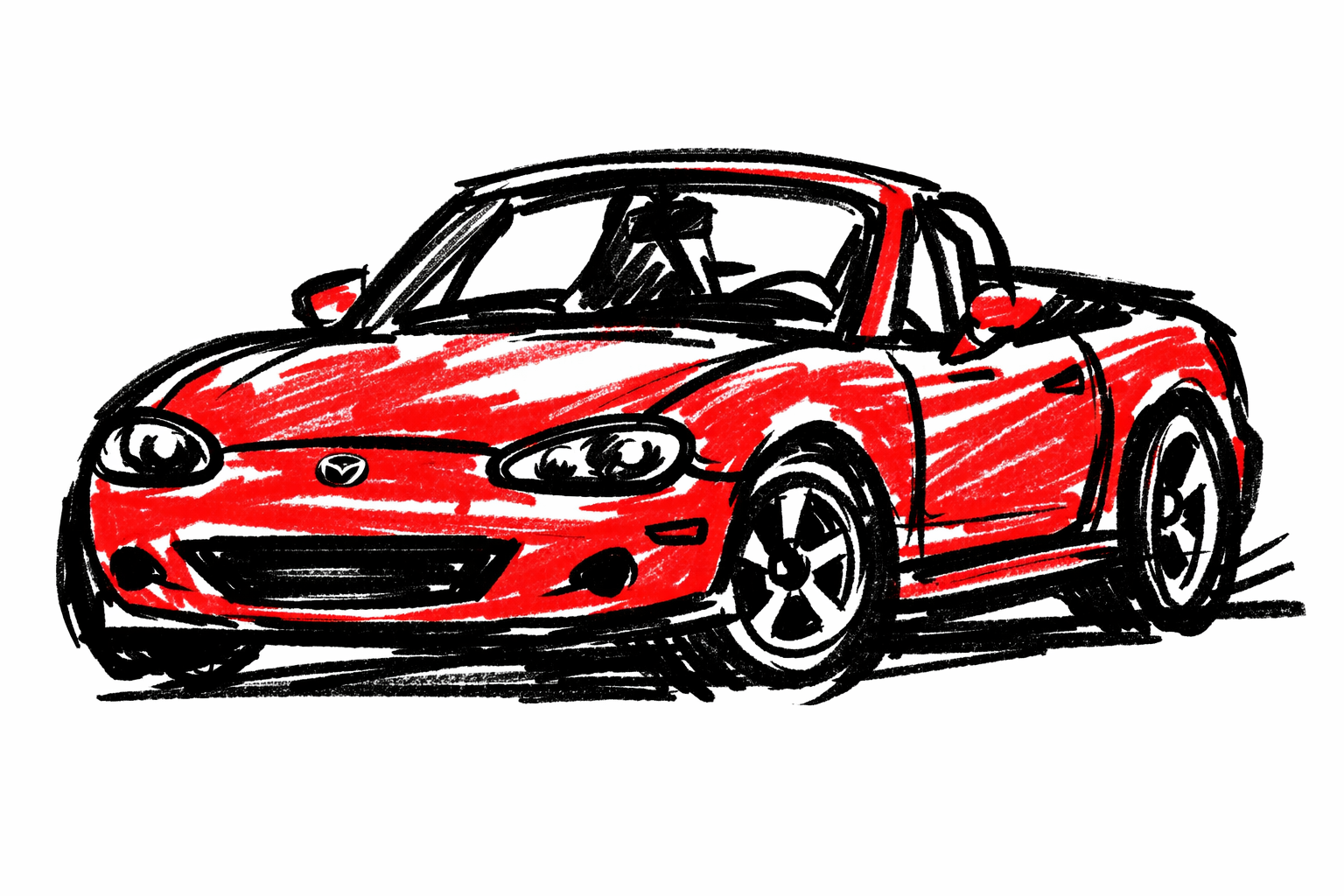
This guide is for Mazda MX-5 NB (1998-2005) only.
Shock replacement can involve spring preload energy. If your method requires spring removal, use proper spring-compressor technique and PPE.
Warning: “When replacing struts, a spring compressor is needed to remove the spring from the strut.” https://www.autozone.com/diy
High-risk quote: “Do one side at a time and use the opposite side as a reference.” https://www.2carpros.com/articles/how-to-replace-a-brake-master-cylinder
Manual-reference quote: Mellens indexes NB-era factory manuals (1999-2001 and 2005), so suspension fastener torques and ride-height-related tightening sequence must be confirmed by exact year/VIN before final torque. https://www.mellens.net/mazda/index.html
Required Tools
- Floor jack + rated jack stands
- Socket/wrench set, breaker bar
- Torque wrench
- Penetrant and rust-safe cleanup tools
- Spring compressor (if disassembling spring/damper assembly)
- Paint marker for baseline hardware orientation
Required Parts / Fluids
- Correct shock absorbers for NB axle position and package (front vs rear are not interchangeable)
- Top mounts/bump stops/dust boots if worn
- Replacement self-locking nuts/bolts where required
Practical parts-planning rule
- Always replace dampers in pairs on the same axle.
- If one side has leaked or lost damping badly, inspect the opposite side mount/bump stop as likely same-age wear items.
Model-specific notes (NB1 vs NB2)
NB1 (1998-2000)
- Verify installed suspension package before ordering; many cars have mixed components.
NB2 (2001-2005)
- Sport/Bilstein package differences are common discussion points; verify actual installed dampers and mounts before parts purchase.
Community quote: r/Miata search repeatedly includes NB-specific shock replacement and Bilstein package compatibility threads. https://www.reddit.com/r/Miata/search/?q=nb%20bilstein%20shock&restrict_sr=1
Step-by-Step Procedure
0) Identify front vs rear mounting points on NB
Before teardown, locate all fasteners and soak exposed threads with penetrant:
- Front: upper mount nuts in engine bay strut tower; lower damper-to-knuckle bolts at hub carrier.
- Rear: upper mount nuts in trunk/rear parcel area (trim access); lower damper bolt at rear suspension arm/upright area.
Photograph washer/bushing stack orientation before disassembly.
1) Confirm damper replacement need
Use bounce/leak/handling symptoms plus visual inspection (oil seepage, damaged shaft, degraded bushings).
Replace in axle pairs (both fronts or both rears minimum) to keep damping balance predictable.
2) Pre-loosen and safe support
- Loosen wheel nuts on ground.
- Lift and support vehicle safely.
- Remove wheel and inspect adjacent bushings/end links while accessible.
3) Remove shock assembly per position
- Mark orientation and hardware stack order.
- Support suspension arm to control droop and prevent sudden drop when lower bolt is removed.
- Keep brake hose/ABS harness clear of tools and moving arm.
- Remove lower then upper attachments in FSM-guided sequence.
- If lower bolt is seized in bushing sleeve, use penetrant + controlled oscillation; avoid bending brackets with excessive side-load.
4) Spring-transfer step (if required)
If your replacement plan requires moving spring/top mount to new damper:
- compress spring evenly with approved compressor,
- never point stored spring energy toward body/face,
- inspect mount bearing, bump stop, and isolators before reuse.
5) Install new shocks and related hardware
- Assemble in correct orientation.
- Start all fasteners by hand.
- Snug hardware first, then set suspension near normal ride height (or use ramps/loaded-arm method) before final torque where FSM requires loaded tightening.
- Ensure upper mount studs seat squarely; mis-seated mounts often cause post-install clunks.
- Final torque at FSM-specified ride-height condition where required.
6) Post-install checks
- Recheck wheel clearance and brake hose/ABS harness routing lock-to-lock (front) and through suspension travel (rear).
- Perform short road test over small bumps at low speed first; listen for top-mount knock or loose lower-bolt clunk.
- Then test rebound control and steering return at normal city speed.
- Schedule alignment check after suspension disturbance.
Torque Specs / Capacities (if applicable)
- Upper/lower shock fastener torques: year/VIN FSM only
- Ride-height-loaded tightening requirements: year/VIN FSM only
No universal publish-safe NB torque table is included because package/hardware variation is common.
Verification / Post-service checks
- No fluid leaks or abnormal noise from new dampers
- Stable rebound behavior over bumps
- No new pull/steering instability
- Fastener recheck after short bedding-in interval
Uncertainty / Open Questions
- Exact torque values and loaded-tightening requirements vary by year/market and suspension package.
- Therefore all sequence-critical numeric values remain FSM-gated for year/VIN accuracy.
Image Credits
No reusable, clearly licensed NB-specific shock replacement diagrams were retrieved in this run.
Sources
- Mellens.net — Mazda Miata Factory Service Manuals. Retrieved 2026-03-13. https://www.mellens.net/mazda/index.html
- AutoZone — Advice & How-To’s (general suspension/brake service context). Retrieved 2026-03-13. https://www.autozone.com/diy
- 2CarPros — How to Replace a Brake Master Cylinder (general workshop safety/reference-method context). Retrieved 2026-03-13. https://www.2carpros.com/articles/how-to-replace-a-brake-master-cylinder