Before You Start / Safety
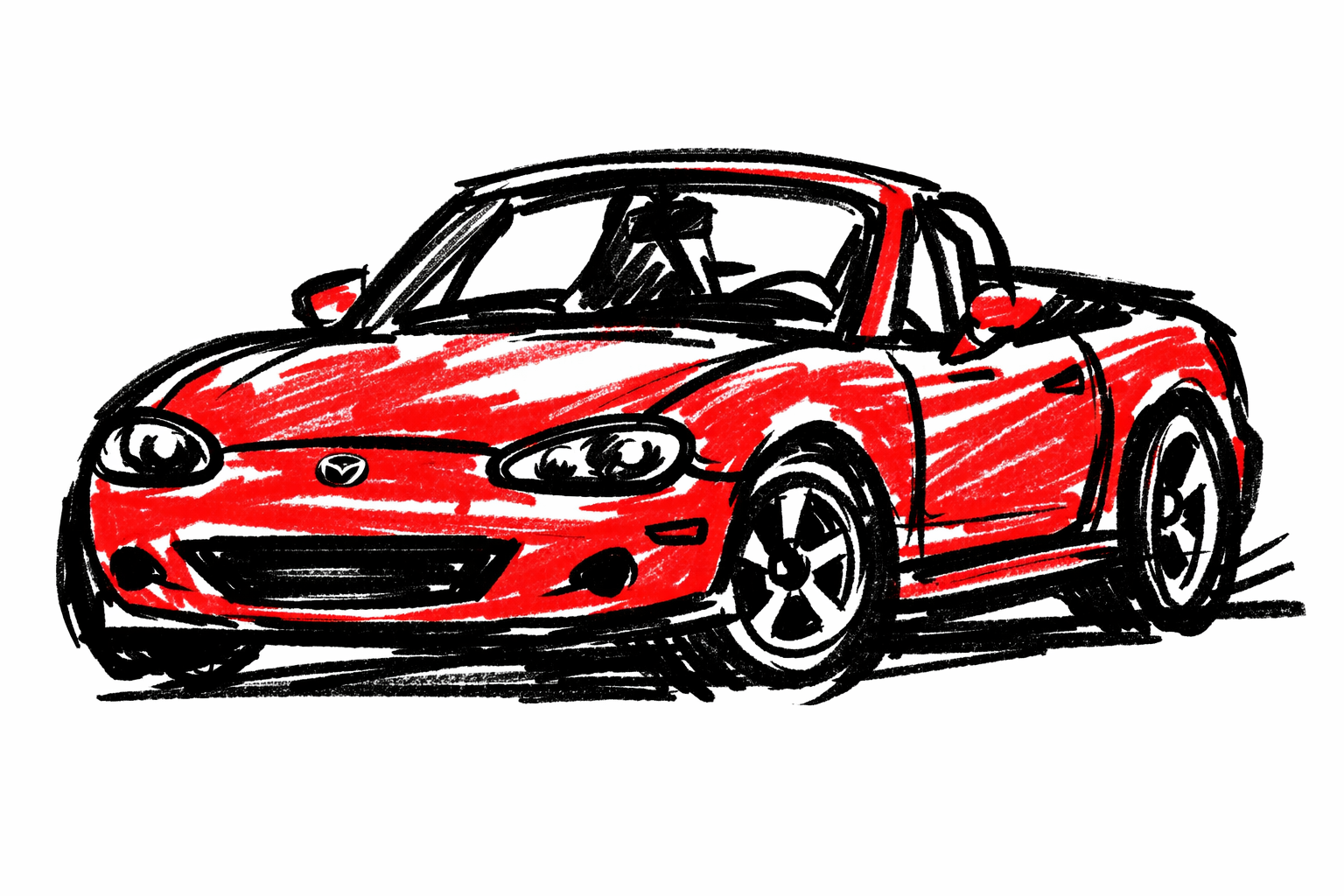
This guide is for Mazda MX-5 NB (1998-2005).
Poor grounds cause a wide range of fake failures: slow crank, random misfire/sensor codes, dim lights, unstable charging, and intermittent ECU behavior.
- Disconnect battery negative before cable/ground service.
- Keep tools clear of positive terminal/body metal contact.
- Use stands if inspecting under-car ground points.
Required Tools
- 10/12/14 mm sockets/wrenches
- Wire brush + abrasive pad
- Multimeter (for voltage-drop tests)
- Contact cleaner
- Torque wrench
Required Parts / Fluids
- Replacement ground strap(s) if frayed/corroded
- Replacement battery cables if heat-damaged or high resistance
- New fasteners/clamps where hardware is stripped/rusted
- Anti-corrosion protectant (light film after assembly)
Typical NB ground/cable checkpoints
Inspect these first:
- Battery negative to chassis point near battery location
- Engine block/head to chassis strap
- Starter/alternator main cable terminals
- Chassis ground eyelets near fuse/relay zones
- Any aftermarket accessory grounds (audio/alarm/lighting)
Aftermarket additions are frequent causes of poor grounding quality on older NB cars.
Step-by-Step Procedure
1) Identify symptom pattern
Ground-related clues:
- click/no-crank intermittently,
- lights dimming with crank,
- charging voltage unstable,
- multiple unrelated low-voltage codes.
2) Visual/mechanical inspection
At each ground/cable point, check for:
- green/white corrosion,
- rust under ring terminal,
- loose hardware,
- cracked insulation,
- overheated/discolored wire near lug.
Perform a light tug test; if terminal rotates/moves, it is not secure enough.
3) Clean contact interfaces correctly
- Remove cable/strap from both mating points.
- Clean ring lug and mating metal to bright bare metal.
- Remove paint/rust/oxidation from contact patch only.
- Reassemble dry and secure, then apply light protectant around (not between) mating faces.
4) Voltage-drop test under load
Do this during crank and with major electrical loads active.
Measure:
- battery negative post to engine block,
- battery negative post to chassis,
- alternator case to battery negative.
Practical interpretation:
- very low drop is expected on healthy grounds,
- consistently high drop indicates resistance at cable, lug, or mounting interface.
If drop stays high after cleaning/tightening, replace affected strap/cable.
5) Cable routing and strain check
- Ensure cables are not pulled tight at engine movement points.
- Keep cables away from sharp edges and exhaust heat.
- Confirm no pinched sections under brackets/trim.
6) Final electrical validation
- Start engine multiple times (cold/hot if possible).
- Check charging voltage stability at idle and loaded conditions.
- Confirm no return of intermittent flicker/dropouts.
Practical fault split
- Slow crank + good battery test: suspect high resistance in ground/main cable path.
- Charging unstable + alternator tests inconclusive: check alternator case ground path first.
- Random multiple electrical faults: inspect shared chassis grounds before replacing modules/sensors.
Verification / Post-service checks
- Repeatable, strong crank performance
- Stable charging behavior under load
- No warm/hot cable ends after use
- No recurring intermittent electrical symptoms
Sources
- MELLENS — Mazda Miata Factory Service Manuals (year/VIN ground-point and cable-routing confirmation source). Retrieved 2026-03-14. https://www.mellens.net/mazda/index.html
- AutoZone — How to Replace Battery Terminals (connection quality and terminal service context). Retrieved 2026-03-14. https://www.autozone.com/diy/battery/how-to-replace-battery-terminals
- 2CarPros — Starter Not Working? Here’s How to Diagnose and Repair It (voltage-path and control-vs-supply diagnostic context). Retrieved 2026-03-14. https://www.2carpros.com/articles/starter-not-working-repair
- Reddit r/Miata — Search: nb ground strap (NB owner symptom-pattern context for ground-related faults). Retrieved 2026-03-14. https://www.reddit.com/r/Miata/search/?q=nb%20ground%20strap&restrict_sr=1