Before You Start / Safety
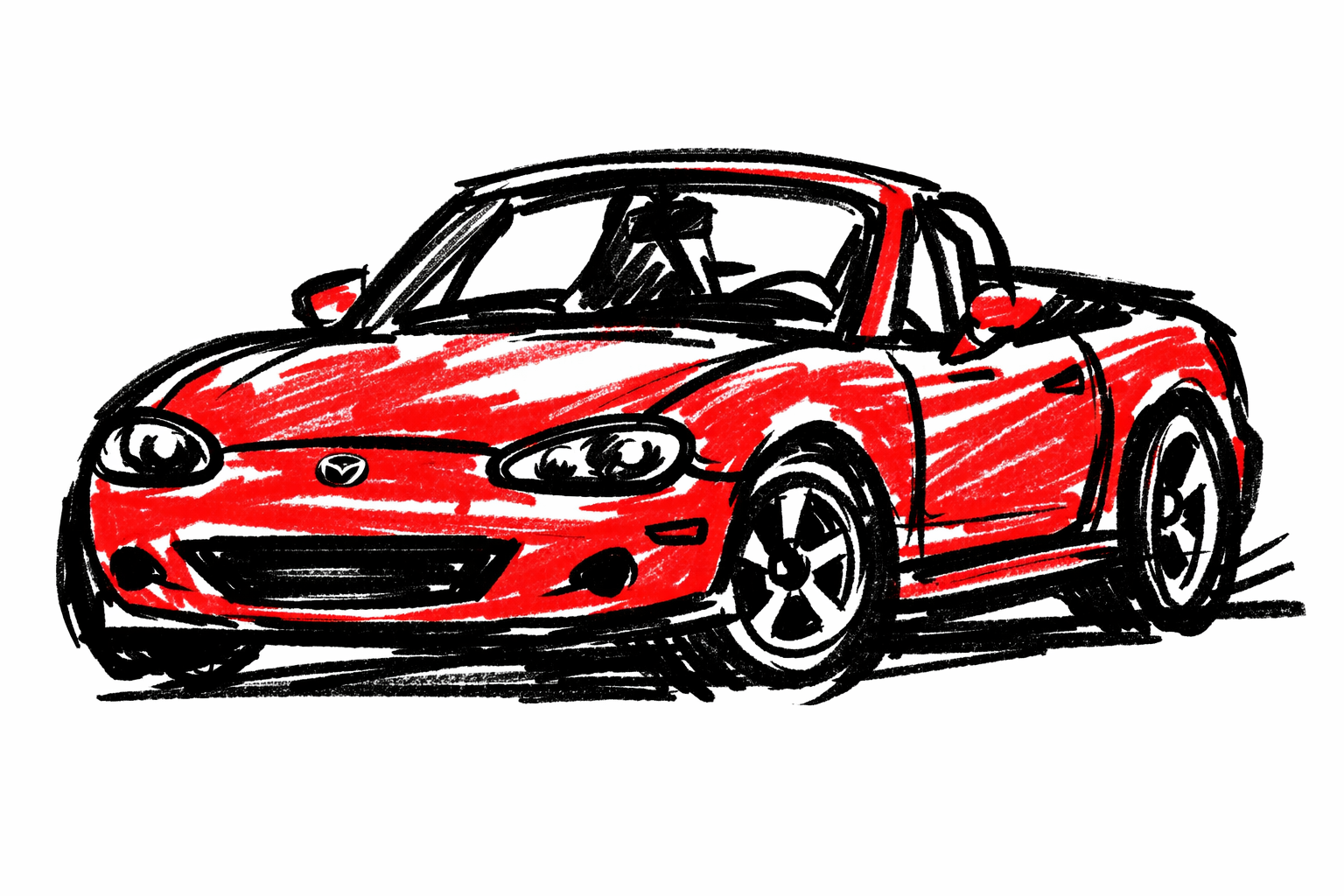
This guide is for Mazda MX-5 NB (1998-2005) only.
A hard brake pedal or poor assist can be caused by booster, vacuum hose, check valve, or upstream vacuum issues. Diagnose before replacing parts.
Warning: “Use jack stands to support the vehicle if needed.” https://www.2carpros.com/articles/how-to-replace-a-brake-master-cylinder
High-risk quote: “Never drive a car that does not have good brake pedal pressure.” https://www.2carpros.com/articles/how-to-replace-a-brake-master-cylinder
Manual-reference quote: Mellens indexes NB-era FSM sets (1999-2001 and 2005), so booster test limits, hose routing, and any model-specific vacuum checks must be confirmed by exact year/VIN. https://www.mellens.net/mazda/index.html
Required Tools
- Flashlight and inspection mirror
- Hand vacuum pump/gauge (recommended)
- Small hose clamps/pliers for temporary line isolation checks
- Basic hand tools for hose/clamp checks
- Brake cleaner/rags for leak trace cleanup
Required Parts / Fluids
- Typically none for inspection
- If faults found: vacuum hose, one-way valve, clamps, or booster/master components as required
Model-specific notes (NB1 vs NB2)
NB1 (1998-2000)
- Verify actual hose routing against FSM; age-related hose cracking is common.
NB2 (2001-2005)
- Same caution: prior modifications can alter vacuum routing and confuse diagnosis.
Step-by-Step Procedure
0) Identify the booster and vacuum line on NB
On NB models, the brake booster is the large round black canister on the firewall behind the brake master cylinder. A thick vacuum hose runs from intake manifold area to the booster via a one-way check valve near the booster grommet.
Quick ID tips:
- booster = large round diaphragm housing,
- master cylinder = aluminum body with fluid reservoir bolted to booster front,
- booster vacuum port/check valve = plastic valve at booster hose entry.
1) Baseline pedal-feel check
With engine off, press pedal several times to deplete reserve assist. Hold pedal, then start engine and observe whether pedal drops slightly as vacuum assist builds.
No assist change suggests vacuum supply/booster/check-valve fault path.
2) Visual vacuum path inspection
Inspect hose from intake manifold to booster for:
- cracks,
- loose clamps,
- oil-softened hose,
- kinks/collapse.
3) Check-valve behavior check
The booster line check valve should hold vacuum in booster when engine vacuum drops.
Practical test methods:
- Blow-through test (removed valve): air should pass in one direction only.
- Hand-vacuum test (installed/bench): apply vacuum and verify it holds without rapid drop.
If flow direction behavior is wrong or valve leaks down, replace valve and re-test before condemning booster.
4) Rule out hydraulic issues in parallel
A sinking pedal can come from hydraulic faults unrelated to booster assist.
High-risk quote: If brake fluid is low or leaking, hydraulic faults (caliper/hose/master issues) can cause severe pedal symptoms and must be repaired first. https://www.2carpros.com/articles/brake-pedal-goes-to-the-floor
5) Leak testing and decision point
- Use vacuum gauge/hand pump where possible.
- At hot idle, manifold vacuum should generally be in a normal gasoline-engine range (roughly high teens to low 20s inHg at sea level; altitude/cam profiles can change this).
- If manifold vacuum is healthy but booster vacuum decays quickly after shutdown, suspect check valve/booster leakage.
- If vacuum supply is weak, diagnose intake/vacuum source faults before replacing booster.
- If vacuum supply is correct and check valve passes, but assist remains poor, booster/internal mechanism fault is more likely.
6) Post-check verification
After any repair:
- confirm consistent pedal assist,
- verify no hissing/vacuum leak noise,
- perform controlled low-speed brake test.
Torque Specs / Capacities (if applicable)
- Booster fasteners, check-valve/hose fittings, and related brake hardware: year/VIN FSM only
No universal publish-safe NB torque table is provided here due variant and hardware differences.
Verification / Post-service checks
- Pedal effort reduced appropriately with engine running
- No vacuum hiss/leak trace from booster hose/check-valve area
- Stable braking feel after repeated stops
- No new fluid leaks around master/booster interface
Uncertainty / Open Questions
- Exact pass/fail thresholds and test sequence details can vary by market/year and by available equipment.
- Therefore final replacement thresholds and any model-specific numeric limits are explicitly FSM-gated.
Image Credits
No reusable, clearly licensed NB-specific brake booster vacuum-routing diagrams were retrieved in this run.
Sources
- Mellens.net — Mazda Miata Factory Service Manuals. Retrieved 2026-03-13. https://www.mellens.net/mazda/index.html
- 2CarPros — How to Replace a Brake Master Cylinder (booster/master location and safety context). Retrieved 2026-03-13. https://www.2carpros.com/articles/how-to-replace-a-brake-master-cylinder
- 2CarPros — Why Does My Brake Pedal Go to the Floor? (hydraulic-vs-assist diagnostic context). Retrieved 2026-03-13. https://www.2carpros.com/articles/brake-pedal-goes-to-the-floor
- AutoZone — Advice & How-To’s (general brake diagnosis context). Retrieved 2026-03-13. https://www.autozone.com/diy