Before You Start / Safety
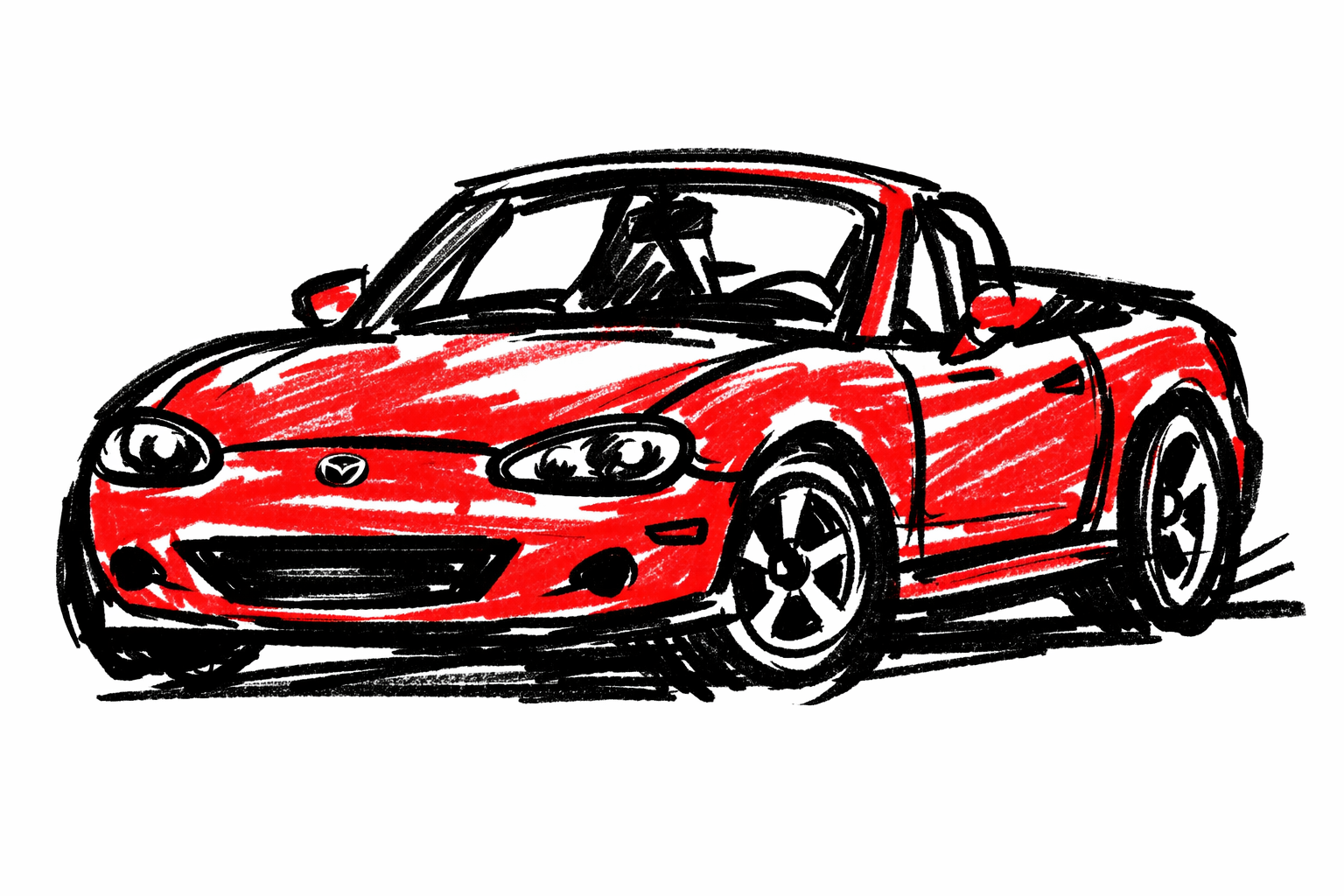
This guide is for Mazda MX-5 NB (1998-2005) only.
Master cylinder failure can lead to severe braking loss. Do not drive until pedal feel and stopping performance are fully restored.
Warning: “Always wear safety glasses and gloves to protect yourself from harmful chemicals.” https://www.2carpros.com/articles/how-to-replace-a-brake-master-cylinder
High-risk quote: “Never drive a car that does not have good brake pedal pressure.” https://www.2carpros.com/articles/how-to-replace-a-brake-master-cylinder
Manual-reference quote: Mellens indexes NB-era FSM sets (1999-2001 and 2005), so exact master cylinder specs, line torque values, and ABS/non-ABS bleed sequence details must be confirmed by year/VIN before final assembly. https://www.mellens.net/mazda/index.html
Required Tools
- Flare-nut (line) wrench set
- Socket/wrench set
- Bench bleeding kit
- Vise (for bench bleeding)
- Catch rags and brake-fluid-safe cleanup supplies
- Brake bleeding equipment
- Torque wrench
Required Parts / Fluids
- Correct master cylinder for your NB brake package
- New sealing hardware if required by design
- Fresh brake fluid from sealed container (correct DOT grade; usually DOT 3 or DOT 4 per cap/manual)
Practical fluid quantity planning
- Bench bleed + full system bleed after replacement: have 1.0 L minimum, ideally 1.5 L available so you can flush until bubble-free and still set final level correctly.
Model-specific notes (NB1 vs NB2)
NB1 (1998-2000)
- Verify ABS presence and line-port configuration before ordering.
NB2 (2001-2005)
- Same caution: line routing and prior repairs may vary; verify installed layout before removal.
Step-by-Step Procedure
0) Identify the master cylinder in the NB engine bay
On NB cars, the brake master cylinder sits on the brake booster at the firewall side of the engine bay and has:
- a translucent brake-fluid reservoir on top,
- multiple hard brake lines at the side/front of the body,
- a level-sensor electrical connector on the reservoir.
It is larger than the nearby clutch reservoir and directly in line with the brake pedal pushrod through the firewall.
1) Confirm failure symptoms first
Common indications include sinking pedal, internal bypass feel, and poor pressure build despite no obvious external leaks.
2) Remove old unit with line-protection discipline
- Remove as much old fluid as practical from reservoir before line opening (suction syringe/turkey baster works well).
- Disconnect level sensor connector.
- Crack line fittings with flare-nut wrench only.
- As each line is freed, cap/plug immediately to reduce drip and contamination.
- Remove master-cylinder mounting nuts and pull unit straight off booster studs to avoid bending lines.
High-risk quote: “Use a line wrench … to remove [brake] lines.” https://www.2carpros.com/articles/how-to-replace-a-brake-master-cylinder
3) Bench bleed new master cylinder before install
Do not install dry and rely on in-car bleeding alone.
High-risk quote: “Before the new master cylinder can be installed it must be bench bled”. https://www.2carpros.com/articles/how-to-replace-a-brake-master-cylinder
- Mount in vise safely (soft jaws/rags to avoid housing damage).
- Install bench-bleed fittings/hoses with hose ends submerged in reservoir fluid.
- Stroke piston slowly in short travel first, then longer strokes, pausing between strokes.
- Continue until no bubbles return and piston movement feels hydraulically firm.
4) Install and reconnect lines carefully
- Fit master to booster studs and seat squarely against booster face.
- Start every line thread by hand (several full turns) before wrench tightening to avoid cross-threading.
- Tighten mounting nuts and line fittings to FSM values.
- Wipe all ports/fittings clean before bleeding so fresh seepage is easy to spot.
5) Bleed entire system and verify pedal
Because hydraulic system was opened, complete system bleeding is required.
High-risk quote: “Once the job is complete bleed the remainder of the brake system to remove any air from the system.” https://www.2carpros.com/articles/how-to-replace-a-brake-master-cylinder
6) ABS and post-service checks
- If ABS-equipped, follow FSM-specific bleeding sequence and any actuator procedure required.
- Verify no leaks under sustained pedal pressure (hold 20-30 seconds).
- Confirm pedal is firm and repeatable before road test.
- Confirm brake warning lamp is off with correct reservoir level and released parking brake.
Torque Specs / Capacities (if applicable)
- Master cylinder mounting nuts: year/VIN FSM only
- Brake line fitting torque: year/VIN FSM only
- ABS-specific bleed procedure: year/VIN FSM only
No universal publish-safe NB-wide torque table is included due model-year/package differences.
Verification / Post-service checks
- No seepage at line ports or master/body seals
- Firm pedal with engine off and on
- Stable stopping performance during controlled low-speed test
- No warning lights related to brake hydraulic faults
Uncertainty / Open Questions
- Exact torque values and ABS bleed details vary by year/market and brake package.
- This guide provides practical method, but final numeric values and ABS-specific routines must come from the year/VIN FSM.
Image Credits
No reusable, clearly licensed NB-specific master-cylinder diagrams were retrieved in this run.
Sources
- Mellens.net — Mazda Miata Factory Service Manuals. Retrieved 2026-03-13. https://www.mellens.net/mazda/index.html
- 2CarPros — How to Replace a Brake Master Cylinder. Retrieved 2026-03-13. https://www.2carpros.com/articles/how-to-replace-a-brake-master-cylinder
- AutoZone — How to Replace a Brake Master Cylinder. Retrieved 2026-03-13. https://www.autozone.com/diy/brakes/how-to-replace-a-brake-master-cylinder
- 2CarPros — How to Replace Rear Brake Pads and Rotors. Retrieved 2026-03-13. https://www.2carpros.com/articles/how-to-replace-rear-brake-pads-and-rotors