Before You Start / Safety
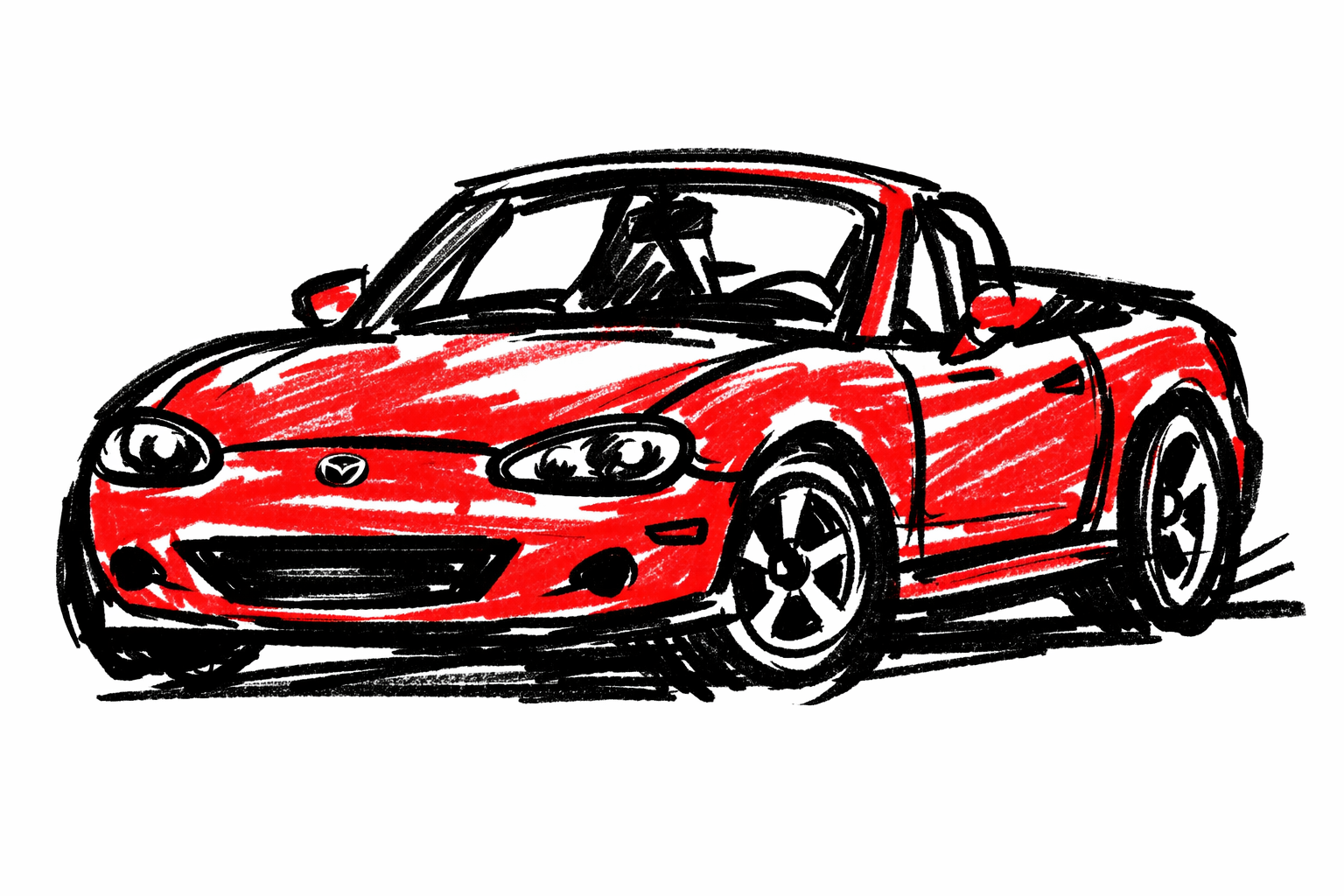
This guide is for Mazda MX-5 NB (1998-2005).
Rotor jobs fail most often because of:
- wrong rotor fitment,
- dirty hub face,
- rushed bedding.
- Work on flat ground with wheel chocks and stands.
- Support caliper so hose is never loaded.
- If retracting pistons, monitor master reservoir level.
Required Tools
- Jack, stands, wheel chocks
- Socket set + breaker bar
- Torque wrench
- Caliper hanger hook/wire
- Wire brush + brake cleaner
- Soft mallet and penetrant (for seized rotor)
- Micrometer/vernier for thickness check
- Dial indicator (optional, best for runout diagnosis)
Required Parts / Fluids
- Correct front/rear rotors for your NB brake package
- New pads/hardware if doing full axle refresh (recommended)
- Brake cleaner
- Small anti-seize amount for hub pilot only (never on friction surfaces)
NB fitment check before installation
Match new rotor against removed rotor before cleaning/installing:
- diameter,
- nominal thickness,
- hat offset/height,
- center bore,
- bolt/stud pattern.
Also confirm left/right axle consistency. Replace rotors in axle pairs.
Step-by-Step Procedure
1) Pre-removal inspection
Inspect current rotor for:
- deep scoring,
- heat spots/blueing,
- cracks/checking,
- heavy outer lip,
- pulsation symptoms under braking.
2) Check discard threshold correctly
Read rotor hat markings:
- many rotors have MIN TH (minimum thickness) cast/stamped.
Measure several points around rotor (away from edge lip):
- if at/below minimum spec, replace.
- if above minimum but badly heat-spotted/cracked, replace anyway.
3) Remove caliper and bracket safely
- Remove wheel.
- Remove caliper and hang it from spring/chassis.
- Remove caliper bracket if required.
Never leave caliper hanging by hose.
4) Remove stuck rotor without damage
If rotor is seized:
- apply penetrant at hub/hat interface,
- tap hat area with soft mallet,
- use extraction-thread holes if present, turning bolts evenly.
Avoid hitting friction surface edges hard enough to chip/crack.
5) Clean hub face to bare, flat contact
This is the most important anti-pulsation step.
- Remove rust scale and debris from hub face and pilot ring.
- Wipe clean and dry.
- Apply tiny anti-seize smear to pilot ring only if needed for corrosion control.
Rotor must sit completely flush on hub.
6) Install rotor and control runout risk
- Degrease new rotor friction faces thoroughly.
- Fit rotor flush; use temporary lug nuts/washers to hold it flat while reassembling bracket/caliper.
- Torque hardware to year/VIN FSM values.
If dial indicator available:
- check lateral runout after install,
- correct hub cleanliness/indexing before final assembly if excessive.
7) Final pedal set and bedding
- Pump pedal until firm before moving.
- Perform controlled bedding with moderate stops and cooldown intervals.
- Avoid hard panic stops on brand-new rotor/pad surfaces unless required for safety.
Practical post-job checks
- No pedal pulsation in initial low-speed checks
- No scraping from hardware contact
- No brake pull under light/moderate braking
- Even temperature trend left/right after short drive
Sources
- MELLENS — Mazda Miata Factory Service Manuals (year/VIN torque and brake-service confirmation source). Retrieved 2026-03-14. https://www.mellens.net/mazda/
- AutoZone — How to Change Brake Pads and Rotors (hub-cleaning and replacement workflow context). Retrieved 2026-03-14. https://www.autozone.com/diy/brakes/how-to-replace-brake-pads-and-rotors
- 2CarPros — How to Replace Front Brake Pads and Rotors (safe caliper support and removal sequence context). Retrieved 2026-03-14. https://www.2carpros.com/articles/how-to-replace-front-brake-pads-and-rotors-fwd
- PowerStop — Brake Pad Break-In Procedure (bedding rationale and staged stop context). Retrieved 2026-03-14. https://www.powerstop.com/resources/brake-pad-break-in-procedure/
- Miata.net Forum — [NB] Are the NB brake pads all the same? (NB package variation caution context). Retrieved 2026-03-14. https://forum.miata.net/vb/showthread.php?t=664233