Before You Start / Safety
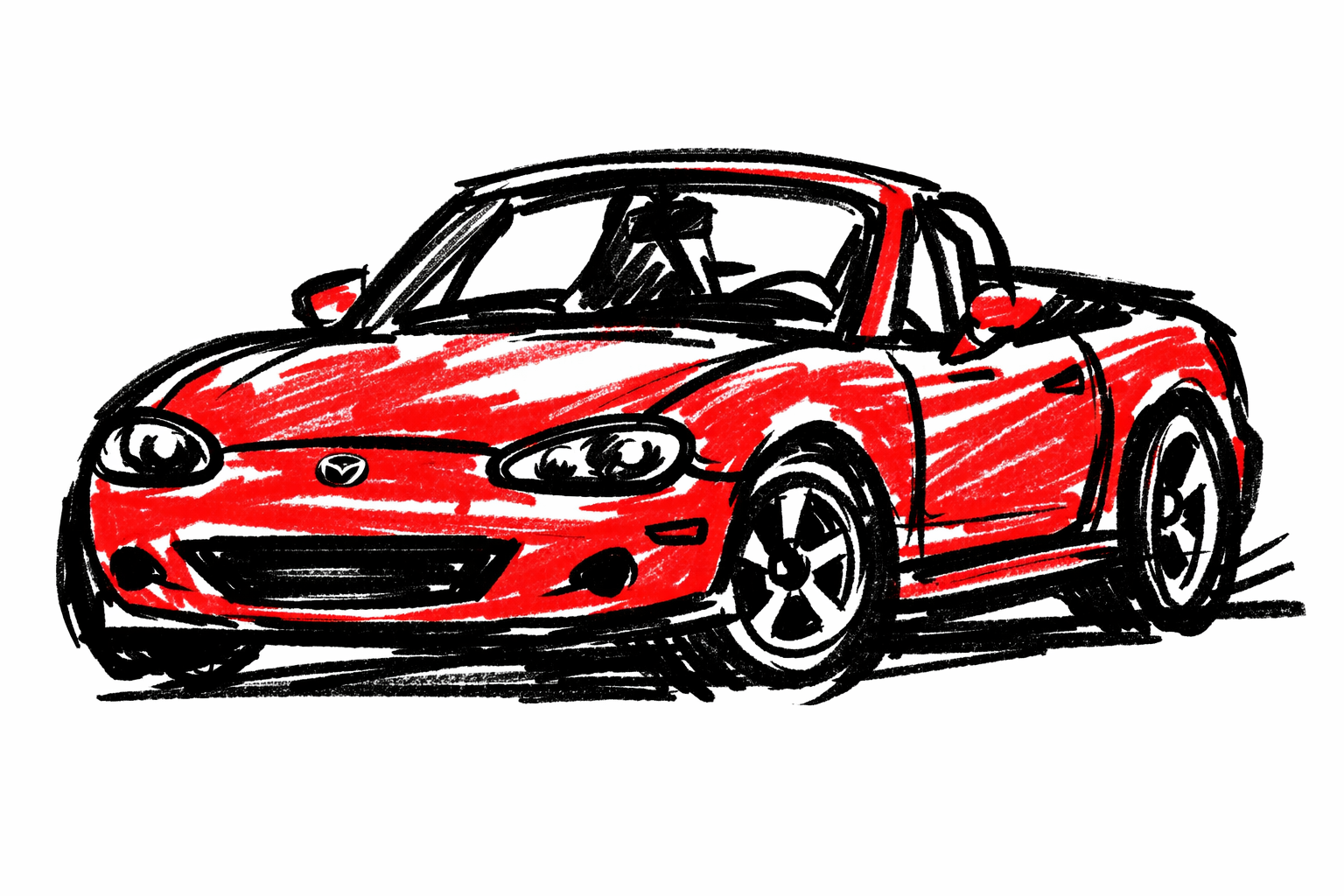
This guide is for Mazda MX-5 NB (1998-2005).
Most “bad starter” diagnoses are actually battery, cable, or control-circuit faults. Test before replacing.
- Car in neutral/park with parking brake fully set.
- Disable ignition/fuel only if doing extended crank testing.
- Keep hands/tools clear of belts and fan during live tests.
Required Tools
- Digital multimeter (with min/max capture helpful)
- Test light
- Battery charger/support
- Socket set with extensions/universal joints
- Torque wrench
Required Parts / Fluids
- Correct starter motor for NB year/transmission
- Terminal cleaner/protectant (if corrosion present)
- Replacement starter hardware only if required
Step-by-Step Procedure
1) Confirm this is a no-crank fault
This guide applies when key is turned to START and:
- engine does not rotate,
- only click/noise occurs, or
- crank is intermittent.
If engine cranks normally but won’t fire, diagnose fuel/spark/management instead.
2) Battery baseline first
Before blaming starter, check battery at posts:
- ~12.6 V fully charged at rest is a good baseline,
- below ~12.2 V suggests low charge state,
- during crank attempt, large voltage collapse indicates battery/supply weakness.
Charge or substitute known-good battery before deeper starter diagnosis.
3) Cable and ground integrity check
Inspect and tug-test:
- battery positive to starter feed path,
- battery negative to chassis,
- engine ground strap(s).
Look for green corrosion, loose lugs, heat-darkened insulation, broken strands.
4) Trigger-wire test at starter solenoid
During START command, check small trigger terminal:
- command voltage present -> control side likely okay,
- no command voltage -> upstream issue (relay/ignition switch/interlock/wiring).
Do not replace starter if trigger command never arrives.
5) Main feed and voltage-drop test
With START commanded:
- measure drop from battery positive post to starter B+ terminal,
- measure drop from starter case to battery negative post.
High drop on either side points to cable/connection resistance, not necessarily bad starter.
6) Starter decision logic
Starter is likely faulty when all are true:
- battery is healthy/charged,
- trigger command is present,
- main feed/ground path is adequate,
- starter still fails to crank reliably.
7) Replacement workflow
- Disconnect battery negative first.
- Remove starter wiring and mounting fasteners.
- Compare old/new starter nose, mounting ears, and terminal orientation.
- Install replacement and tighten to year/VIN FSM values.
- Reconnect wiring securely and protect terminal from contamination.
8) Post-install validation
- Verify consistent crank speed cold and hot.
- Confirm no grinding/whine after key release.
- Recheck charging system and cable temperature after several starts.
Practical fault split
- Single click + no crank: solenoid engages but motor/feed path weak.
- Rapid clicking: battery voltage collapse or poor main connections.
- No click/no crank with no trigger voltage: control-side fault upstream.
- Hot soak no-crank only: starter heat sensitivity or high-resistance cable/ground issue.
Verification / Post-service checks
- Immediate, repeatable cranking across multiple key cycles
- No return of click-only condition
- No abnormal voltage-drop behavior during crank
- No cable heating/smell after repeated starts
Sources
- MELLENS — Mazda Miata Factory Service Manuals (year/VIN starter circuit and torque confirmation source). Retrieved 2026-03-14. https://www.mellens.net/mazda/index.html
- 2CarPros — Starter Not Working? Here’s How to Diagnose and Repair It (trigger/feed diagnostic sequence context). Retrieved 2026-03-14. https://www.2carpros.com/articles/starter-not-working-repair
- AutoZone — Advice & How-To’s (automotive electrical diagnosis context). Retrieved 2026-03-14. https://www.autozone.com/diy
- Reddit r/Miata — Search: nb starter replacement (NB owner symptom-pattern context). Retrieved 2026-03-14. https://www.reddit.com/r/Miata/search/?q=nb%20starter%20replacement&restrict_sr=1