Before You Start / Safety
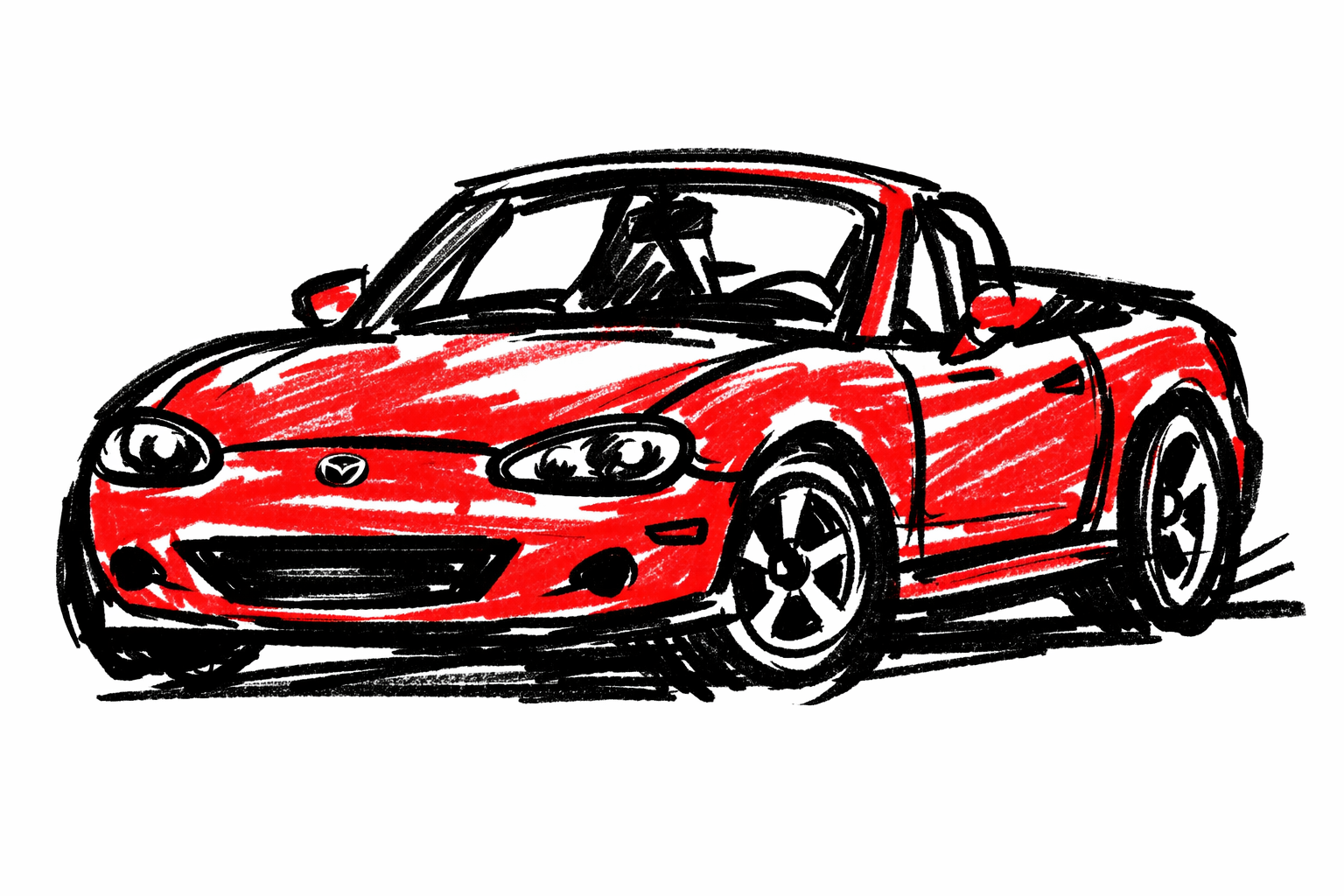
This guide is for Mazda MX-5 NB (1998-2005) only.
Control arm work directly affects steering and alignment. Incorrect installation can cause unstable handling and rapid tire wear.
Warning: “Use jack stands to support the vehicle if needed.” https://www.2carpros.com/articles/how-to-replace-a-brake-master-cylinder
High-risk quote: “Use proper safety gear and follow all safety precautions.” https://www.autozone.com/diy
Manual-reference quote: Mellens indexes NB-era factory manuals (1999-2001 and 2005), so upper/lower arm hardware, ball-joint handling, and torque-at-ride-height steps must be confirmed by exact year/VIN before final tightening. https://www.mellens.net/mazda/index.html
Required Tools
- Floor jack + rated jack stands
- Socket/wrench set and breaker bar
- Torque wrench
- Ball-joint separator tools (as needed)
- Pry bar for controlled play checks
- Penetrant and rust cleanup tools
- Paint marker for baseline eccentric/cam position marks
Required Parts / Fluids
- Correct upper/lower control arm assemblies or service parts for your NB
- Replacement ball joints/bushings if using serviceable-arm strategy
- New self-locking nuts/bolts where specified
Model-specific notes (NB1 vs NB2)
NB1 (1998-2000)
- Confirm arm and ball-joint service strategy before ordering: full-arm replacement vs press-in components can vary by prior repairs.
NB2 (2001-2005)
- Same caution: many cars have mixed suspension parts; inspect installed hardware first.
Identify the arm correctly before ordering
- Upper control arm: shorter arm mounted higher in wheel well, connected to upper ball joint.
- Lower control arm: larger arm carrying more load, connected to lower ball joint and spring/damper geometry.
Compare left/right visually and verify bushing style, ball-joint style, and ABS/brake-line bracket tabs before purchase.
Step-by-Step Procedure
1) Confirm the fault before teardown
Typical triggers include:
- clunk over bumps,
- steering vagueness,
- uneven/rapid tire wear,
- failed bushing visual inspection,
- joint play.
Rule out tie-rod, wheel-bearing, and sway-link issues before condemning arms.
2) Baseline alignment references
- Mark current cam/eccentric positions where present.
- Record tire wear pattern and steering wheel center.
These marks are for reassembly reference only; final alignment is still required.
3) Safe disassembly sequence
- Raise and support car securely.
- Support suspension arm to manage stored suspension load.
- Disconnect related links as required by FSM.
- Separate ball joint carefully with correct tools.
Practical order that reduces stress on parts:
- Crack pivot and joint fasteners loose before fully unloading the arm.
- Keep a jack under the arm while separating the ball joint taper.
- Once taper is free, lower/support arm gradually to avoid sudden drop.
- Remove pivot bolts while noting washer/eccentric orientation marks.
4) Choose replacement strategy
- Complete arm replacement: often faster/cleaner when bushings and joints are both aged.
- Component-only service: only when arm bores and mounting points are confirmed serviceable.
Decision shortcut:
- torn ball-joint boot + bushing cracks on same arm => complete arm usually best value,
- isolated joint issue with healthy bushings/arm shell => component service may be acceptable.
5) Install and tighten correctly
- Start all fasteners by hand.
- Ensure joint boots are not twisted/pinched.
- Snug hardware first, then set suspension near normal ride height before final bushing-pivot torque where FSM specifies loaded tightening.
- Verify cam/eccentric washers stayed in intended baseline orientation before final tightening.
- Final-torque in FSM order, including any ride-height-loaded tightening requirements.
6) Post-service alignment and verification
- Perform alignment check immediately after suspension arm replacement.
- Verify no binding/clunk and stable steering return on road test.
Torque Specs / Capacities (if applicable)
- Control-arm pivot bolts, ball-joint nuts, and related hardware: year/VIN FSM only
- Ride-height-loaded bushing torque steps: year/VIN FSM only
No universal publish-safe NB torque table is provided here.
Verification / Post-service checks
- No clunk/knock over bumps
- Steering response consistent and centered
- No visible bushing wind-up or joint boot distortion
- Alignment confirmed after repair
Uncertainty / Open Questions
- Several control-arm-specific how-to URLs were blocked/404 in this environment.
- Community evidence was partly search/snippet level.
- Therefore this guide keeps replacement sequencing conservative and defers all numeric values to year/VIN FSM.
Image Credits
No reusable, clearly licensed NB-specific control-arm service diagrams were retrieved in this run.
Sources
- Mellens.net — Mazda Miata Factory Service Manuals. Retrieved 2026-03-13. https://www.mellens.net/mazda/index.html
- AutoZone — Advice & How-To’s (general suspension service context). Retrieved 2026-03-13. https://www.autozone.com/diy
- 2CarPros — How to Replace a Brake Master Cylinder (general workshop safety context). Retrieved 2026-03-13. https://www.2carpros.com/articles/how-to-replace-a-brake-master-cylinder