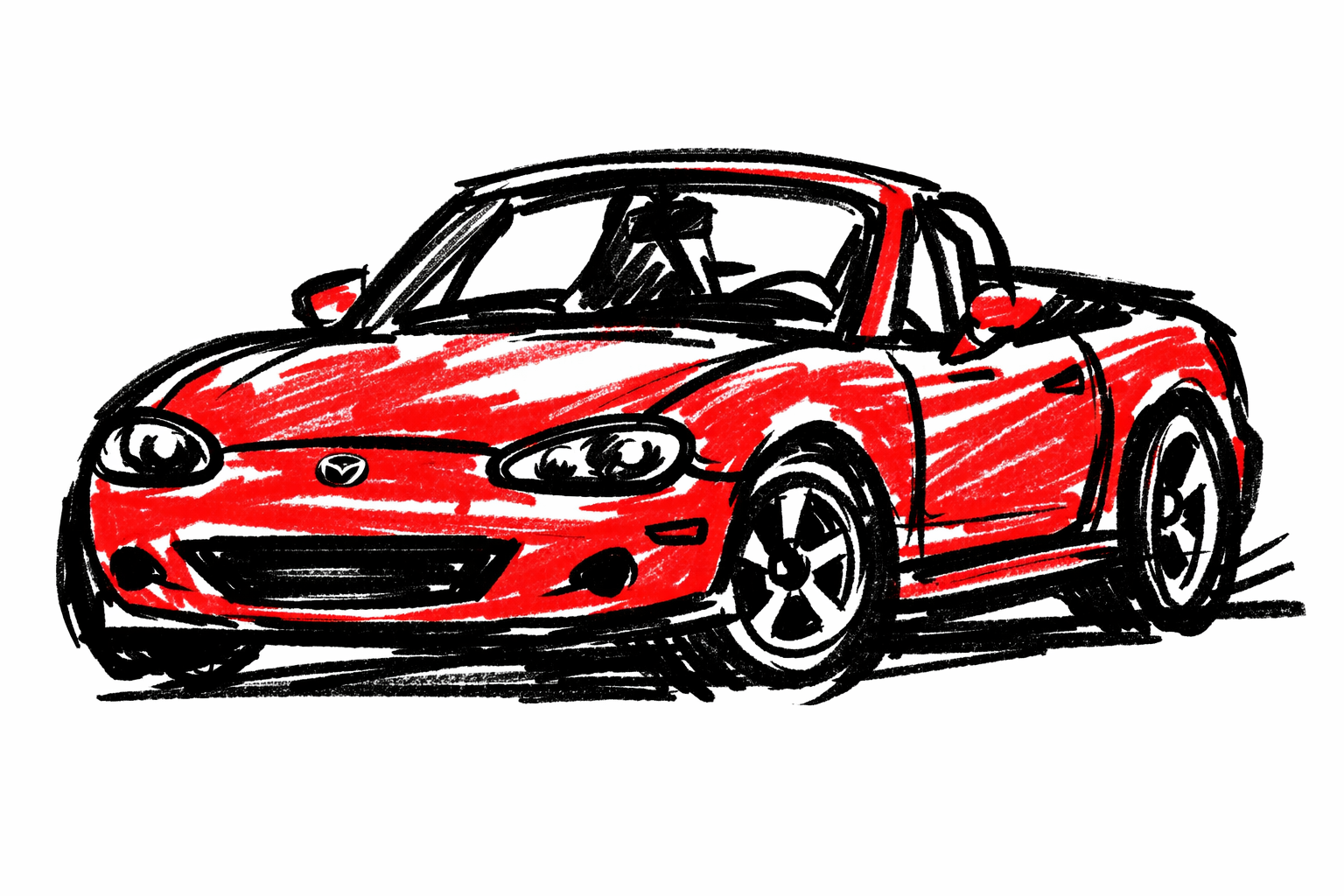
Before You Start / Safety
- Work on a level surface, use wheel chocks, and support the car on stands.
- Wear eye protection and gloves.
- Confirm brake fluid reservoir level before compressing pistons.
Warning: “If it’s full, some fluid needs to be removed. This will help avoid spillage due to overflow when compressing the brake caliper piston.” https://www.autozone.com/diy/brakes/how-to-replace-brake-pads-and-rotors
Required Tools
- Jack, axle stands, wheel chocks
- Socket set and breaker bar
- Caliper piston tool (rear may require wind-back style depending on caliper design)
- Wire brush, brake cleaner, rags
- Torque wrench
Required Parts / Fluids
- Front/rear pad sets that match your NB brake package
- New hardware kit (clips/springs/shims) where available
- Brake cleaner
- Small amount of high-temp brake lubricant for approved contact points
Fast fitment check before opening parts bags
Compare the new pads against removed pads for:
- backing-plate outline,
- pad-ear shape,
- thickness,
- wear-sensor tab location (if present),
- shim/clip layout.
If one detail does not match, stop and verify package fitment before reassembly.
Model-specific notes (NB1 vs NB2)
- NB brake hardware and pad fitment can vary by year/trim/brake package.
- Verify pad shape/hardware against removed parts before full reassembly.
Manual-reference quote: “The Manuals are in PDF format. You can use Adobe Reader to read or print them.” https://www.mellens.net/mazda/
Community quote: “My understanding is that all 03-05 came with ss, and therfore big brakes.” https://forum.miata.net/vb/showthread.php?t=426617
Step-by-Step Procedure
1) Inspect first, replace second
Measure remaining friction material and check both sides of each axle for uneven wear (sticking slider/piston clues).
Practical replacement threshold:
- around 3 mm or less friction material: plan immediate replacement,
- inner pad much thinner than outer pad: inspect slider pins/piston movement before installing new pads.
2) Remove wheel and caliper carefully
- Crack wheel nuts loose before lifting.
- Raise and support the car at proper jack points.
- Remove caliper fasteners and support caliper with a hook/wire so hose is not strained.
- Keep left/right hardware separated on a clean tray to avoid mixing clips/shims.
3) Compare old and new pads before installation
Dry-fit and compare backing-plate shape, slot/tab geometry, and hardware arrangement.
Community confirmation quote: “The issue is… ask for set of standard pads… the shop-man ask if… ‘akebono or sumitomo?’” https://forum.miata.net/vb/showthread.php?t=664233
4) Retract piston correctly
Retract piston with the correct tool/method. Monitor brake fluid reservoir to avoid overflow.
NB rear-caliper note:
- many rear calipers require a wind-back style tool,
- forcing a screw-type rear piston straight in can damage the mechanism.
5) Clean and prepare contact points
Clean caliper bracket contact areas and install hardware/clips correctly. Apply brake lubricant only where pad ears/shims are designed to slide.
6) Install pads and reassemble
Install pads, refit caliper, and torque all service fasteners to your year/VIN FSM specification.
7) Perform controlled bedding
After reassembly and pedal priming, bed pads using controlled moderate stops and cool-down.
Simple street bedding pattern:
- 5-6 moderate stops from ~60 to 20 km/h (40 to 12 mph),
- avoid complete standstill with very hot brakes,
- drive 10-15 minutes with minimal braking for cool-down.
High-risk quote: “The break-in procedure is critical to brake performance.” https://www.powerstop.com/resources/brake-pad-break-in-procedure/
Torque Specs / Capacities
- Torque values vary by front/rear and NB year/caliper setup.
- Use factory service data for your exact model year and brake package.
Verification / Post-service checks
- Firm pedal before driving
- No fluid leaks, no hose twist, no pad/hardware rattle
- Straight, stable braking on road test
- Re-check wheel lug torque after short drive/heat cycle
Practical mistakes to avoid
- Do not press brake pedal with caliper removed and no pad/disc restraint.
- Do not mix old and new hardware clips across corners.
- Do not lubricate pad friction material, rotor faces, or stud/taper seating surfaces.
- Do not skip bedding and immediate post-service leak/pedal checks.
Sources
- Mellens.net — Mazda Miata Factory Service Manuals. Retrieved 2026-03-12. https://www.mellens.net/mazda/
- AutoZone — How to Change Brake Pads and Rotors: Step-by-Step Replacement Guide. Retrieved 2026-03-12. https://www.autozone.com/diy/brakes/how-to-replace-brake-pads-and-rotors
- PowerStop — What is the Break-In Procedure? Retrieved 2026-03-12. https://www.powerstop.com/resources/brake-pad-break-in-procedure/
- Miata.net Forum — [NB] 2003 Miata Rear Brake Pad and Caliper Confusion w/ pictures . . Retrieved 2026-03-12. https://forum.miata.net/vb/showthread.php?t=426617
- Miata.net Forum — [NB] Are the NB brake pads all the same? Retrieved 2026-03-12. https://forum.miata.net/vb/showthread.php?t=664233