Before You Start / Safety
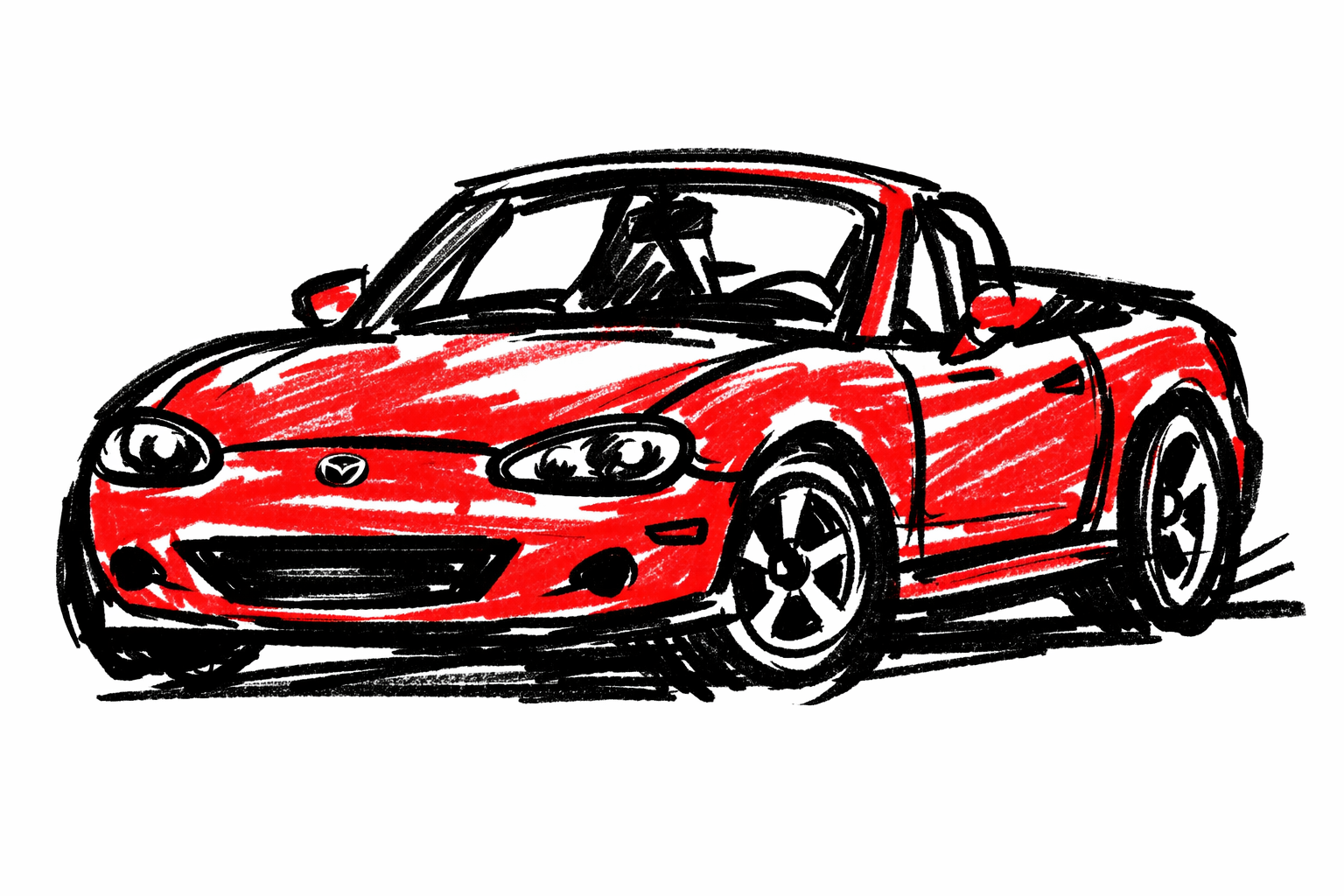
This guide is for Mazda MX-5 NB (1998-2005) only.
Brake hard-line corrosion is a critical safety fault. If corrosion is significant, do not keep driving until repaired.
Warning: “Safely raise the car in the air and secure it on jack stands while removing the wheels.” https://www.2carpros.com/articles/how-to-replace-rear-brake-pads-and-rotors
High-risk quote: “Never operate a vehicle without normal brake pedal operation”. https://www.2carpros.com/articles/how-to-replace-rear-brake-pads-and-rotors
Manual-reference quote: Mellens provides NB-era FSM sets (1999-2001 and 2005), so exact brake line routing, clip locations, and torque values must be confirmed by year/VIN before fabrication or replacement. https://www.mellens.net/mazda/index.html
Required Tools
- Floor jack + rated jack stands
- Strong inspection light and mirror
- Wire brush / non-destructive cleaning tools
- Brake cleaner
- Flare-nut wrenches
- Brake bleeding kit
- If repairing: proper tubing/flaring tools and correct line material
Required Parts / Fluids
- Correct brake line sections/fittings (if replacement is needed)
- New clips/brackets as needed
- Fresh brake fluid (correct DOT spec)
Model-specific notes (NB1 vs NB2)
NB1 (1998-2000)
- Verify ABS vs non-ABS routing and junction points before line planning.
NB2 (2001-2005)
- Same caution: prior repairs may have altered line routing/material.
Step-by-Step Procedure
1) Map corrosion severity before loosening anything
Inspect full line runs at:
- clip points,
- underbody transition areas,
- rear axle/subframe path,
- areas exposed to road spray/debris.
2) Distinguish surface rust vs structural corrosion
- Light surface oxidation with intact wall thickness may be monitorable.
- Flaking scale, wetness, pitting near unions, or deformation requires repair/replacement planning.
Do not rely on cosmetic cleaning to “fix” compromised line wall thickness.
3) Decide repair scope
- Localized section repair only when corrosion is clearly isolated.
- Full run replacement when multiple spots are affected or original line condition is uncertain.
- Replace clips and protect new routing where abrasion is possible.
4) Protect fittings from damage during disassembly
- Pre-clean unions.
- Use penetrating oil and correct flare-nut tools.
- If a fitting rounds, stop and escalate to section replacement strategy.
5) Reassembly and bleeding
- Route and clip lines per FSM path.
- Check line clearances through suspension/steering travel.
- Bleed system fully and verify firm pedal.
High-risk quote: If the brake hydraulic system is opened and pedal remains spongy, bleeding is required before operation. https://www.2carpros.com/articles/how-to-replace-rear-brake-pads-and-rotors
Torque Specs / Capacities (if applicable)
- Union/fitting torques: year/VIN FSM only
- Proportioning/ABS-junction fittings: year/VIN FSM only
- Bleed order specifics: year/VIN FSM only
No universal publish-safe NB torque table is provided due routing/package differences.
Verification / Post-service checks
- No leaks at any union under sustained pedal pressure
- Firm, repeatable pedal
- No line contact/chafing through steering and suspension movement
- Stable brake performance after short road test
Uncertainty / Open Questions
- Multiple direct brake-line how-to pages were blocked/404 in this environment.
- Independent-source coverage was therefore limited to available general brake-service references and conservative FSM-gated guidance.
- Community sources were partly search/snippet level rather than full thread extraction.
Community quote: r/Miata NB rust search results repeatedly include significant NB rust discussions, reinforcing the need for thorough underbody and line-path inspection on older cars. https://www.reddit.com/r/Miata/search/?q=nb%20brake%20line%20rust&restrict_sr=1
Community confirmation quote: old.reddit NB brake-line-rust search context includes repeated rust/workflow discussions and long-form NB maintenance threads, supporting a “replace more, not less” decision bias where uncertainty exists. https://old.reddit.com/r/Miata/search?q=nb+brake+line+rust&restrict_sr=on
Image Credits
No reusable, clearly licensed NB-specific hard-line routing diagrams were retrieved in this run.
Sources
- Mellens.net — Mazda Miata Factory Service Manuals. Retrieved 2026-03-13. https://www.mellens.net/mazda/index.html
- 2CarPros — How to Replace Rear Brake Pads and Rotors. Retrieved 2026-03-13. https://www.2carpros.com/articles/how-to-replace-rear-brake-pads-and-rotors
- AutoZone — Advice & How-To’s. Retrieved 2026-03-13. https://www.autozone.com/diy
- Reddit r/Miata — Search: nb brake line rust. Retrieved 2026-03-13. https://www.reddit.com/r/Miata/search/?q=nb%20brake%20line%20rust&restrict_sr=1
- Reddit r/Miata (old.reddit) — Search: nb brake line rust. Retrieved 2026-03-13. https://old.reddit.com/r/Miata/search?q=nb+brake+line+rust&restrict_sr=on