Before You Start / Safety
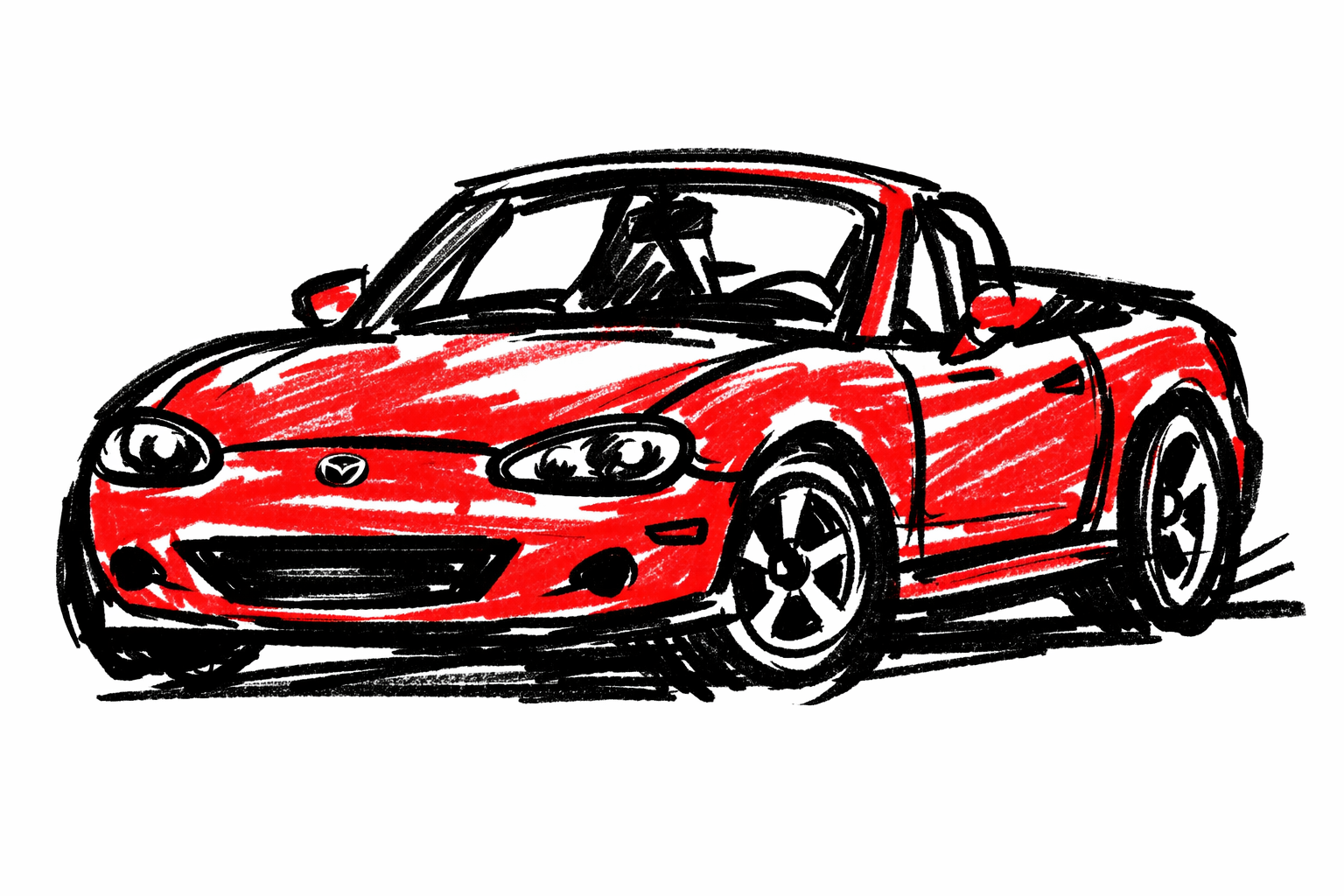
This guide is for Mazda MX-5 NB (1998-2005).
Many NB cars now have mixed OEM/aftermarket roadside kits. Verify your real-world setup before you need it on the roadside.
- Work on level ground.
- Keep ignition off and handbrake set while inventorying.
- Never put any part of your body under a car supported only by the emergency jack.
Required Tools
- Tire pressure gauge
- Flashlight
- Rag and light penetrating oil (for jack screw threads)
- Optional: torque wrench for home verification
Required Parts / Fluids
- Spare wheel/tire in serviceable condition
- Emergency jack + handle
- Lug wrench that actually fits your wheel nuts
- Wheel-lock key (if fitted)
Where the NB roadside kit usually lives
Open the trunk/boot and lift the carpeted floor panel:
- Spare wheel is typically in the well under the trunk floor.
- Hold-down fastener is usually centered through the spare.
- Jack/tools are often in side trays/compartments near the spare (layout varies by market/trim).
If your car has an aftermarket battery relocation, audio setup, or custom trunk liner, confirm nothing blocks quick spare access.
Practical pressure targets
- Temporary/space-saver spare: commonly around 60 psi (4.2 bar) — confirm exact value on tire sidewall.
- Full-size spare: set to the same cold target as your road tires (door-jamb label).
Do not assume the spare is ready; low spare pressure is one of the most common roadside failures.
Step-by-Step Procedure
1) Inventory and photo-document everything
Confirm and photograph:
- spare,
- jack,
- jack handle,
- lug wrench,
- lock key,
- tow eye/hook tool (if supplied on your market car).
Photo records make it obvious later when a part has gone missing.
2) Spare tire condition check
- Set pressure to target.
- Inspect sidewalls for cracks, bulges, dry-rot.
- Inspect tread and puncture history.
- Check DOT age code if visible; very old spares can look unused but still be unsafe.
3) Jack functionality check (home, controlled)
- Run jack up/down unloaded through most of its travel.
- Verify screw turns smoothly without binding.
- Lightly lube exposed jack screw threads if dry/rusty.
- Confirm handle engagement is solid (no slipping).
4) Tool fitment check on your actual wheels
This is critical for modified NB cars:
- Test lug wrench on one wheel nut.
- Test lock key on one locking nut.
- Confirm socket depth clears wheel pocket design.
Do this at home, not during rain on a shoulder.
5) Dry-run jacking-point familiarity
Without fully lifting, position jack at a known correct reinforced point and confirm:
- saddle alignment,
- stable base contact,
- safe handle swing space.
If you are unsure on location, use the dedicated jacking-point guide before roadside use.
6) Repack for fast roadside access
- Secure all tools so they cannot rattle or damage paint.
- Store lock key in a predictable, labeled spot.
- Keep gloves + small kneeling mat in trunk for night/wet tire changes.
Pre-trip 2-minute checklist
Before long trips:
- Spare pressure
- Jack present
- Lug wrench present
- Lock key present (if needed)
- Reflective vest/triangle where required by local law
Verification / Post-service checks
- Spare inflated and logged
- Jack cycles correctly
- Wrench/key physically tested on-car
- Driver/passenger can find all tools in under 60 seconds
Sources
- Bridgestone — How to Change a Flat Tire (roadside tire-change safety process and preparation logic). Retrieved 2026-03-15. https://www.bridgestonetire.com/learn/maintenance/how-to-change-a-flat-tire/
- Discount Tire — How to Change a Flat Tire (safety constraints and no-under-car-on-jack guidance). Retrieved 2026-03-15. https://www.discounttire.com/learn/how-to-change-a-flat-tire
- MELLENS — Mazda Miata Factory Service Manual archive (year/VIN NB reference source for exact market-specific toolkit/jack arrangement). Retrieved 2026-03-15. https://www.mellens.net/mazda/index.html