Before You Start / Safety
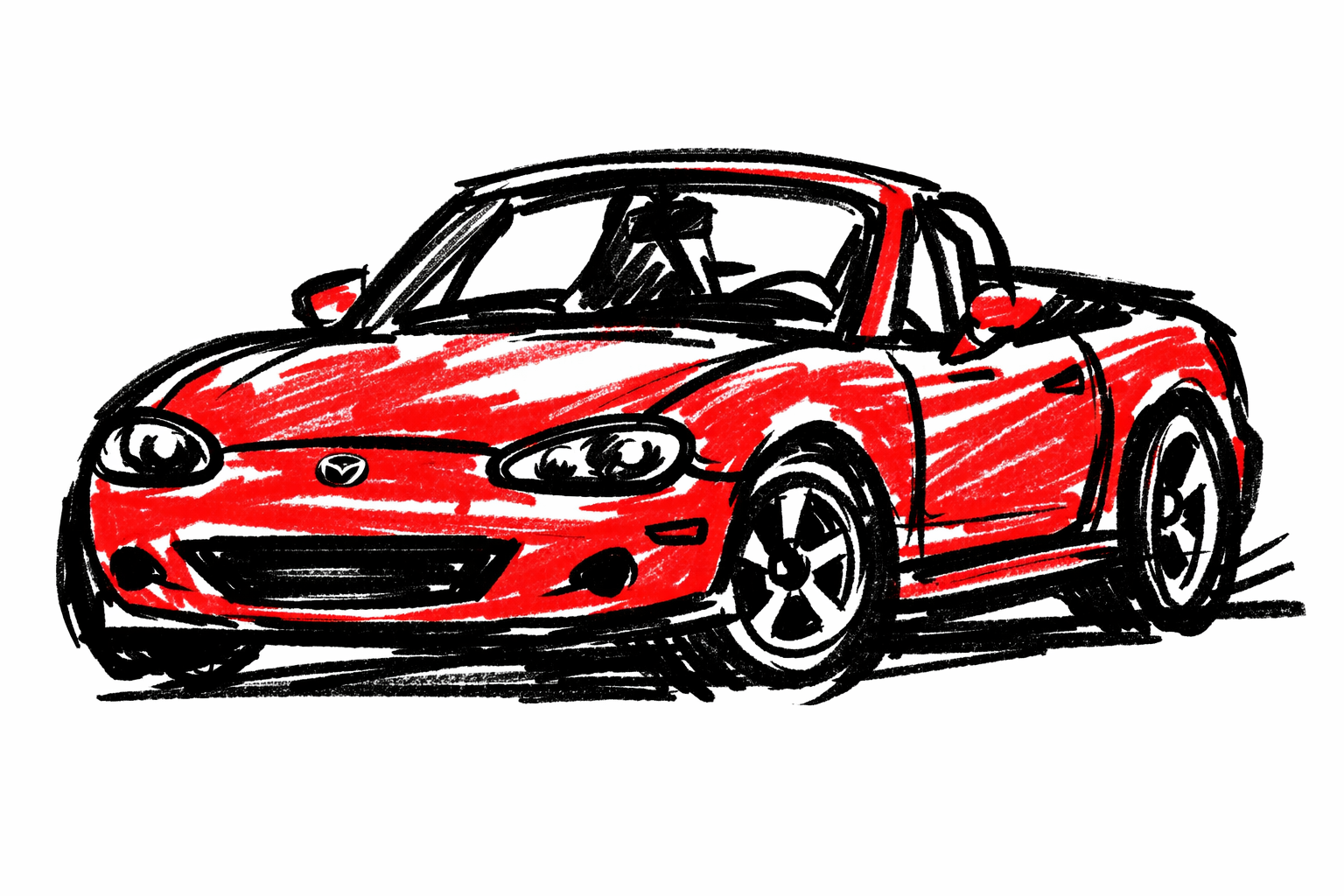
This guide is for Mazda MX-5 NB (1998-2005) only.
Steering-column U-joint issues are safety-critical. Binding, notchiness, or free play can compromise control and should be corrected before normal driving.
Warning: “Use jack stands to support the vehicle if needed.” https://www.2carpros.com/articles/how-to-replace-a-brake-master-cylinder
High-risk quote: Steering looseness can be caused by tie rod or steering component wear and must be repaired promptly for safe handling. https://www.2carpros.com/articles/tie-rod-end-replacement
Manual-reference quote: Mellens indexes NB-era manuals (1999-2001 and 2005), so steering column coupler alignment marks, pinch-bolt torque, and inspection limits must be confirmed by exact year/VIN before service. https://www.mellens.net/mazda/index.html
Required Tools
- Flashlight and inspection mirror
- Basic socket/wrench set
- Torque wrench
- Paint marker (for coupler orientation marks)
- Helper for steering-wheel input during observation
- Jack and rated stands (if underside access needed)
Required Parts / Fluids
- Usually none for inspection-only work
- Replacement column/U-joint coupler hardware if worn/corroded
- New pinch bolt/nut if specified by FSM
Model-specific notes (NB1 vs NB2)
NB1 (1998-2000)
- Confirm column/rack coupler hardware by actual installed parts.
NB2 (2001-2005)
- Same caution: prior rack/column swaps can change coupler details.
Community quote: r/Miata search includes repeated NB steering-column and binding-related questions, including under-column parts identification posts. https://www.reddit.com/r/Miata/search/?q=nb%20steering%20u%20joint&restrict_sr=1
Step-by-Step Procedure
0) Locate the intermediate shaft / U-joint area on NB
On NB cars, the steering intermediate shaft/U-joint coupler is in the lower steering-column path between firewall exit and steering rack input shaft.
How to identify it:
- look down from engine bay near firewall/rack input area,
- find the small universal-joint coupling with pinch-bolt hardware,
- confirm matching lower-column to rack-input connection.
Mark coupler orientation before loosening any hardware.
1) Confirm symptom pattern first
Typical column/U-joint-related clues:
- notchy feel while turning,
- steering that sticks around center,
- intermittent heavy steering not explained by low fluid,
- play/clunk transmitted through wheel.
2) Rule out hydraulic and tire causes
Before blaming U-joints, check:
- power-steering fluid level/condition,
- belt condition/tension,
- tire pressures and front-end damage,
- rack and tie-rod condition.
3) Inspect U-joint/coupler visually
- Check for corrosion, seized movement, torn dust protection (if present), and loose pinch hardware.
- Inspect the shaft/coupler for witness marks indicating movement at splines.
4) Binding/play test
- With front wheels unloaded where appropriate, move steering slowly through full range.
- Feel for rough spots or notches.
- Observe joint articulation while an assistant gently turns wheel.
Isolation trick:
- compare steering feel engine-off vs engine-on;
- if notchiness remains with assist removed and is visible at coupler articulation, column/U-joint fault becomes more likely than hydraulic fault.
If the joint is visibly stiff or has lash independent of rack input, service/replacement is indicated.
5) Replacement/adjustment (if required)
- Mark shaft-coupler orientation before loosening.
- Replace worn coupler/U-joint components per FSM.
- Install and torque pinch hardware to FSM values.
- Reconfirm smooth articulation through range.
6) Post-service steering verification
- Verify no bind, notchiness, or clunk.
- Recheck wheel centering and toe/alignment as needed if steering link geometry was disturbed.
- Perform a short low-speed test including parking-lot lock-to-lock turns and center-return check.
Torque Specs / Capacities (if applicable)
- Column coupler pinch hardware torque and steering-column fasteners: year/VIN FSM only
No universal publish-safe NB column U-joint torque table is provided.
Verification / Post-service checks
- Steering moves smoothly lock-to-lock with no notch
- No free play/clunk at column coupler
- Steering self-centers normally during low-speed test
- No new steering warning symptoms after short road check
Uncertainty / Open Questions
- Exact coupler hardware, pinch-bolt style, and replacement criteria may vary by rack/column history and market spec.
- Therefore all numeric values and replacement criteria are conservatively FSM-gated by year/VIN.
Image Credits
No reusable, clearly licensed NB-specific steering-column U-joint diagrams were retrieved in this run.
Sources
- Mellens.net — Mazda Miata Factory Service Manuals. Retrieved 2026-03-13. https://www.mellens.net/mazda/index.html
- 2CarPros — Tie Rod End Replacement (steering-play and toe-baseline context). Retrieved 2026-03-13. https://www.2carpros.com/articles/tie-rod-end-replacement
- Family Handyman — How To Check and Change Power Steering Fluid (hydraulic-vs-mechanical steering diagnosis context). Retrieved 2026-03-13. https://www.familyhandyman.com/article/how-to-check-power-steering-fluid/
- AutoZone — Advice & How-To’s (general steering service context). Retrieved 2026-03-13. https://www.autozone.com/diy
- 2CarPros — How to Replace a Brake Master Cylinder (general workshop safety context). Retrieved 2026-03-13. https://www.2carpros.com/articles/how-to-replace-a-brake-master-cylinder