Before You Start / Safety
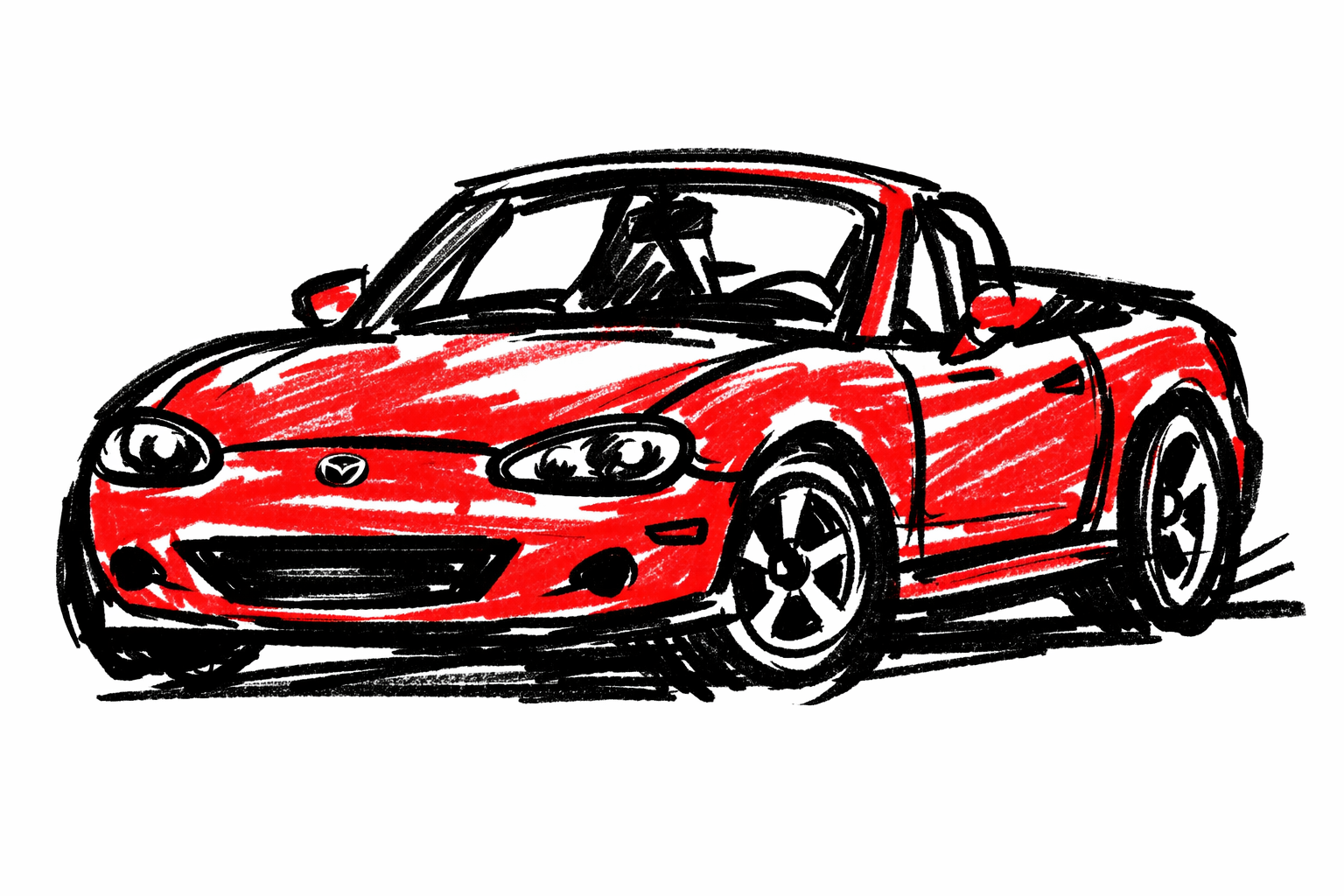
This guide is for Mazda MX-5 NB (1998-2005, NB1/NB2) oil-leak inspection.
The goal is to identify the true source first. On older engines, oil often travels before dripping, so the visible drip point is frequently not the original leak point.
Warning: Oil on hot exhaust components can create smoke/odor and fire risk; repair active leaks promptly and avoid running with low oil level. https://www.aa1car.com/library/oil_leaks.htm
Manual-reference quote: Mazda Miata factory references are split by year groups (including “1999-2001 Mazda Miata Service Repair Manual” and “2005 Mazda Miata Service Repair Manual”); confirm final routing, component access, and torque steps using your year-correct FSM. https://www.mellens.net/mazda/index.html
Required Tools
- Inspection light
- Brake cleaner/degreaser + rags
- UV dye + UV lamp (optional, strongly recommended)
- Mirror and small pick
- Jack/stands for underbody checks
- Nitrile gloves
Required Parts / Fluids
Inspection-only job may not require parts. Have these in mind if leak source is confirmed:
- valve cover gasket set
- cam/crank seals (usually timing-belt-overlap jobs)
- CAS/cam-sensor O-ring (where applicable)
- oil pressure switch and sealing washer/sealant (as specified)
Model-specific notes (NB1 vs NB2)
NB1 (1998-2000)
- Common leak triage still starts with valve cover perimeter and upper-engine sources.
- CAS-style leak discussions are common in NA/NB community context; verify exact hardware on your engine before ordering parts.
NB2 (2001-2005)
- Similar inspection sequence, but sensor/cover/access details can differ by year and market.
- VVT-area leaks can be misread as valve-cover or front-seal leaks; clean and trace carefully before parts replacement.
Step-by-Step Procedure
1) Baseline fluid level and symptom pattern
- Check oil level on level ground, engine off.
- Record where drips appear after overnight parking.
- Note smoke/odor events under load (often indicates oil contacting exhaust).
2) Clean first, then inspect
A dirty engine hides leak origin. Degrease suspect areas and recheck after a short drive/idle cycle.
High-risk quote: When the leak source is not obvious, clean the engine and then inspect from the top down because oil runs downward before collecting as a drip. https://www.2carpros.com/articles/engine-is-leaking-oil
3) Inspect top-end leak points before lower seals
Check these first:
- valve cover perimeter and corners,
- around CAS/cam-sensor housing area (where fitted),
- PCV/breather area for pressure-related seep trends.
4) Inspect front-engine leak paths
Inspect timing-cover region and front crank area for oil tracks. If oil emerges from behind timing covers, front seals may be involved.
High-risk quote: Front main-seal leaks can spread oil across the front of engine and down the pan, so apparent lower leaks may originate at front rotating-seal areas. https://www.2carpros.com/articles/engine-is-leaking-oil
5) Inspect rear-engine and bellhousing area carefully
Oil at bellhousing/lower rear engine may be:
- rear main seal,
- oil running down from upper rear sources,
- sensor/O-ring leak paths misidentified as rear-main failure.
Community quote: In NB owner discussions, leak diagnosis at the back of the engine frequently includes checking CAS/O-ring-related seep paths before assuming rear main seal failure. https://www.mx5nutz.com/threads/oil-leak-on-back-of-engine.390284/
6) Use UV dye when source remains uncertain
If two or more sources are plausible, add UV dye and recheck with UV lamp after short operation.
7) Decide repair scope by access overlap
- Small external leaks: fix source directly (e.g., upper gasket/O-ring area).
- Front cam/crank leaks: often most efficient during timing-belt service.
- Rear-main suspicion: confirm carefully before transmission-out jobs.
Community confirmation quote: In NB forum discussion, owners repeatedly report that valve-cover/front leaks can run rearward/downward and imitate rear-main leaks, so cleaning and short-cycle reinspection is used before committing to transmission-out work. https://forum.miata.net/vb/showthread.php?t=785379
Torque Specs / Capacities
- This guide is diagnosis-first; no single universal torque table is published here.
- Use year/VIN-correct FSM values for any seal/gasket/switch replacement work.
Verification / Post-service checks
After repair:
- Clean area again.
- Recheck after full warm-up and next-day cold park.
- Confirm no new drip trail and stable oil level.
- Reinspect after 100-200 km.
Uncertainty / Open Questions
- Publicly accessible NB-specific seal/switch torque tables were not consistently extractable in this run.
- Some forum pages were partially restricted by anti-bot/cookie controls; community evidence here uses two direct NB-oriented threads (MX5Nutz + Miata.net).
- Confidence is high for leak-tracing workflow, moderate for universal all-market component mapping.
Image Credits
No clearly reusable licensed NB-specific oil-leak path diagrams were retrieved during this run.
Sources
- Mellens.net — Mazda Miata Factory Service Manuals. Retrieved 2026-03-12. https://www.mellens.net/mazda/index.html
- AA1Car (Larry Carley) — How to Find & Fix Engine Oil Leaks. Retrieved 2026-03-12. https://www.aa1car.com/library/oil_leaks.htm
- 2CarPros — Engine is Leaking Oil. Retrieved 2026-03-12. https://www.2carpros.com/articles/engine-is-leaking-oil
- MX5Nutz Forum — Oil leak on back of engine??. Retrieved 2026-03-12. https://www.mx5nutz.com/threads/oil-leak-on-back-of-engine.390284/
- MX-5 Miata Forum — 2001 NB Oil Leak - Rear Seal? Oil Pan Seals?. Retrieved 2026-03-12. https://forum.miata.net/vb/showthread.php?t=785379