Before You Start / Safety
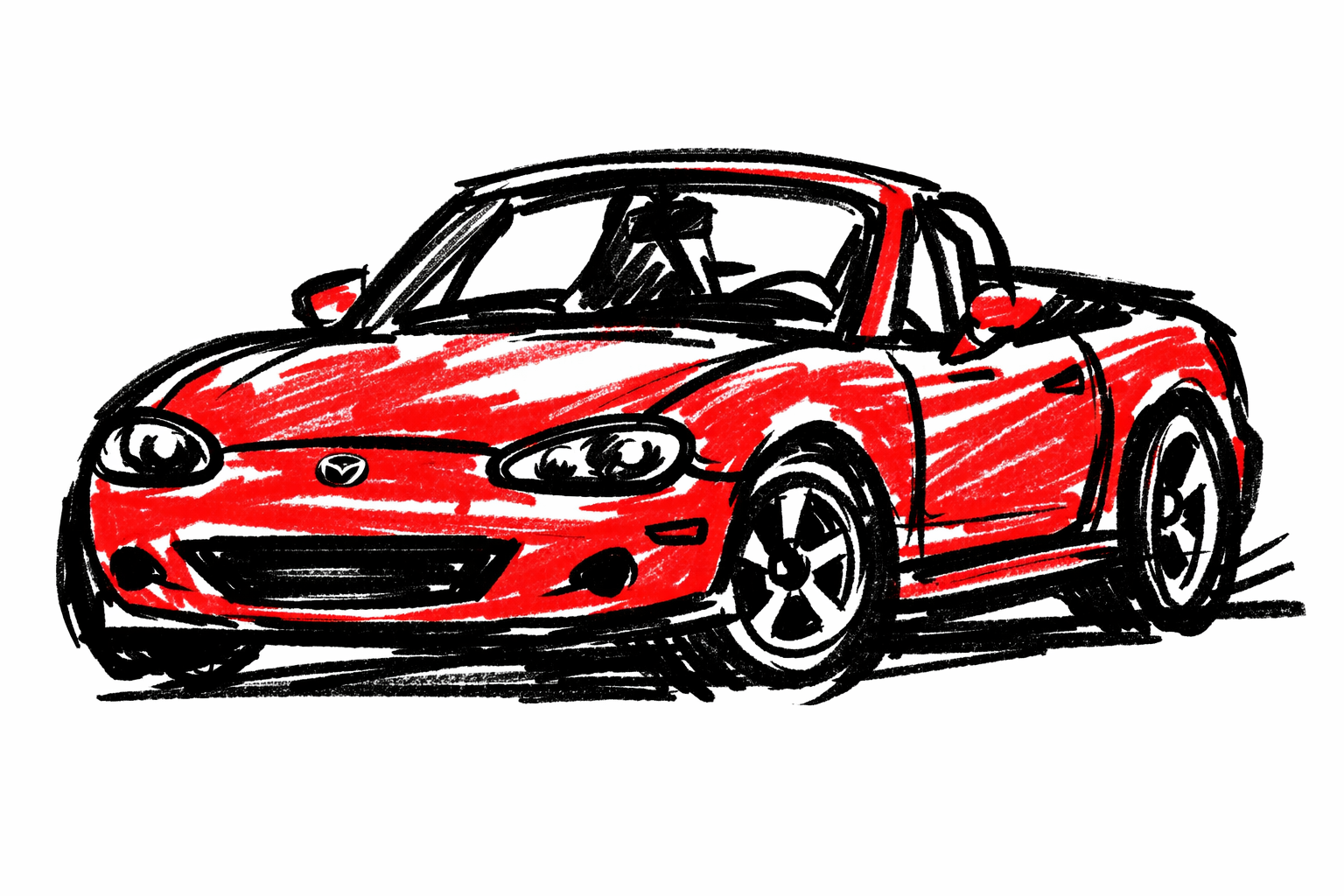
This guide is for Mazda MX-5 NB (1998-2005).
Sticking slide pins are a top cause of tapered pad wear and one-wheel brake drag on aging NB cars.
- Work on level ground with stands under proper lift points.
- Do not let caliper hang by brake hose.
- Service one corner at a time so you can compare parts orientation.
Required Tools
- Floor jack + rated jack stands + wheel chocks
- Caliper pin bolt sockets/hex bits
- Torque wrench
- Brake cleaner + lint-free wipes
- Nylon brush (and fine brass brush for light corrosion)
- Small pick for boot lip cleaning
Required Parts / Fluids
- Brake-safe, rubber-compatible slide-pin grease
- Replacement pin boots if torn/hardened
- Replacement pins if pitted/scored
Grease selection (important)
Use only grease intended for caliper pins and rubber boots.
Practical example products:
- Permatex Ceramic Brake Parts Lubricant
- Other dedicated caliper-pin greases labeled brake-rubber compatible
Avoid general chassis grease or petroleum grease that can swell boots.
Where the slide pins are
On NB floating calipers, slide pins are the two guide-pin bolts on the back side of caliper body.
- One upper and one lower pin.
- Each pin runs in a booted bore in caliper bracket.
- Rubber boots should seat fully in both bracket groove and pin groove.
Step-by-Step Procedure
1) Confirm drag/taper symptoms before disassembly
Common signs:
- inner/outer pad wear mismatch,
- one wheel significantly hotter after similar driving,
- delayed pad release feel,
- uneven braking pull under light braking.
2) Remove caliper and support it correctly
- Remove caliper pin bolts.
- Lift caliper off bracket.
- Hang caliper with hook/wire from spring or chassis point.
Do not stretch or twist brake hose while working.
3) Extract pins and inspect each separately
For each pin, check:
- rust pitting,
- scoring/galling,
- discoloration from heat,
- bent shaft,
- old grease turned dry/crumbly.
If pin surface is pitted where it rides in bore/boot, replace it.
4) Clean bores and boot seats
- Remove old grease completely from pin and bore.
- Clean inside boot lips and bracket grooves.
- Ensure vent path is clear (where applicable) so pin movement does not hydraulically lock.
5) Inspect and reinstall boots
Replace boot if any of these apply:
- tear, split, or pinhole,
- hard/brittle rubber,
- loose fit that won’t stay in groove.
Boot must snap into bracket groove all the way around.
6) Lubricate pins correctly
- Apply thin, even coat to pin shaft only where it slides.
- Do not overpack bore with grease.
- Keep grease off pad friction surfaces and rotor.
Hand-check movement:
- pin should glide smoothly with light resistance from boot,
- no binding points through full travel.
7) Reassemble and torque
- Refit caliper over pads.
- Install pin bolts and torque to year/VIN FSM values.
- Recheck free sliding movement after bolts are tightened.
8) Functional checks before road test
- Pump brake pedal until firm.
- Spin wheel by hand (with drivetrain in neutral/safe condition) and compare drag side-to-side.
- After short drive, compare wheel temperatures left/right for major imbalance.
Practical pass/fail criteria
- Pass: smooth pin motion, equalized pad wear trend, no abnormal one-side heat.
- Fail: pins bind after lubrication, boot pops out, or one wheel still significantly hotter.
If fail persists, inspect piston return, hose internal collapse, and pad abutment hardware.
Verification / Post-service checks
- No brake pull under normal stops
- More even inner/outer pad contact patterns
- No clunk from loose caliper hardware
- No fresh overheating smell from one corner
Sources
- MELLENS — Mazda Miata Factory Service Manuals (year/VIN torque and brake-service confirmation source). Retrieved 2026-03-14. https://www.mellens.net/mazda/
- AutoZone — How to Change Brake Pads and Rotors (uneven wear/sticking hardware context). Retrieved 2026-03-14. https://www.autozone.com/diy/brakes/how-to-replace-brake-pads-and-rotors
- 2CarPros — How to Replace Rear Brake Pads and Rotors (caliper support and slide service workflow context). Retrieved 2026-03-14. https://www.2carpros.com/articles/how-to-replace-rear-brake-pads-and-rotors
- Permatex — Ceramic Brake Parts Lubricant (caliper pin/hardware lubricant suitability context). Retrieved 2026-03-14. https://www.permatex.com/products/lubricants/brake-lubricants/permatex-ceramic-extreme-brake-parts-lubricant/