Before You Start / Safety
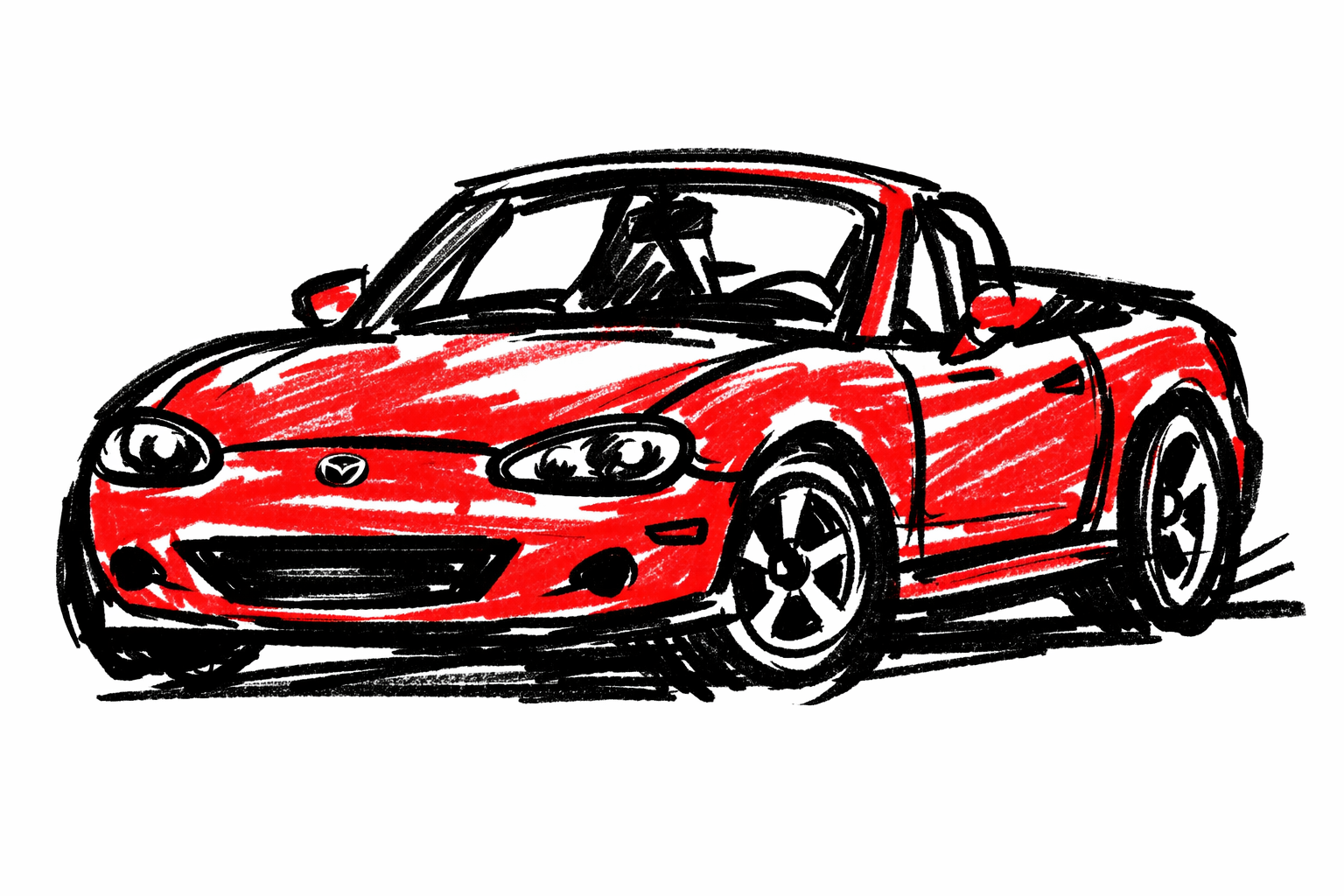
This guide is for Mazda MX-5 NB (1998-2005).
A weak cap can cause overflow loss and unstable temperatures even when hoses/radiator look fine.
- Engine must be fully cold.
- Open cap in two stages (detent then full removal).
- Do not exceed cap-rated pressure during bench test.
Required Tools
- Cooling-system pressure tester with cap adapter
- Flashlight
- Rag, gloves, eye protection
Required Parts / Fluids
- Replacement radiator cap with matching pressure rating
- Small amount of coolant for top-up if level dropped
Where the cap is on NB (exact orientation)
Standing in front of the car with hood open:
- Radiator cap is on top tank of the radiator, near front edge of engine bay.
- Overflow/expansion bottle is nearby and connected by small hose from cap neck area.
Cap appearance:
- round metal top with warning text,
- two side ears (push-and-turn lock),
- spring/valve assembly underneath.
Read cap rating before buying
Common NB-related cap markings include:
- 88 kPa (~0.9 bar / 13 psi)
- 108 kPa (~1.1 bar / 16 psi)
Use the rating specified for your exact setup (year/VIN/FSM or verified existing spec).
Safe cap removal (cold engine only)
- Lay rag over cap.
- Push down and turn counter-clockwise to first stop.
- Pause for any residual pressure release.
- Push down again and remove fully.
If any hiss is heard on a supposedly cold engine, stop and let it cool longer.
Step-by-Step Procedure
1) Symptom baseline
Cap-related clues:
- overflow bottle repeatedly rises then radiator ends up low after cooldown,
- dried coolant residue around cap neck,
- minor boil-over at idle/traffic without obvious hose rupture,
- repeated top-ups with no obvious large external leak.
2) Physical inspection: cap + neck
Cap checks:
- lower seal not cracked/hardened/swollen,
- spring action not sticky/rusty,
- lock ears intact.
Neck checks:
- sealing seat smooth and clean,
- no nicks/corrosion where seal lands,
- lock tabs not bent.
A perfect new cap cannot seal a damaged neck.
3) Bench-test cap
- Install cap on tester adapter.
- Raise pressure gradually toward marked rating.
- Observe opening and hold behavior.
Practical decision:
- holds near rating without quick drop = usable,
- opens too early / cannot hold / leaks down quickly = replace.
4) Install new cap correctly
- Clean neck seat and locking tabs.
- Seat cap squarely.
- Push down and rotate to full lock stop (no half-lock).
5) Heat-cycle validation
- Warm engine to operating temperature.
- Confirm no fresh residue at neck/cap.
- Next cold cycle: verify radiator and overflow levels are stable.
Replace-now criteria (skip further testing)
Replace immediately if:
- seal visibly torn/hardened,
- spring seized/corroded,
- cap won’t lock securely,
- coolant staining around cap persists across cycles.
Verification / Post-service checks
- No new coolant crust/wetness at cap neck
- Stable coolant levels over 2-3 heat cycles
- Temperature behavior stable in traffic and cruise
Sources
- MELLENS — Mazda Miata Factory Service Manuals (year/VIN cooling-system reference source). Retrieved 2026-03-15. https://www.mellens.net/mazda/index.html
- Natrad — How To Pressure Test A Cooling System (cooling/cap pressure test rationale and safe approach). Retrieved 2026-03-15. https://natrad.com.au/info-advice/how-do-you-pressure-test-a-cooling-system/
- 2CarPros — How to Perform an Automotive Engine Cooling System Pressure Test (cap handling and test workflow context). Retrieved 2026-03-15. https://www.2carpros.com/articles/radiator-pressure-test
- AskMyAuto — How to Test a Radiator Cap (bench-test method context). Retrieved 2026-03-15. https://askmyauto.com/how-to-test-a-radiator-cap/