Before You Start / Safety
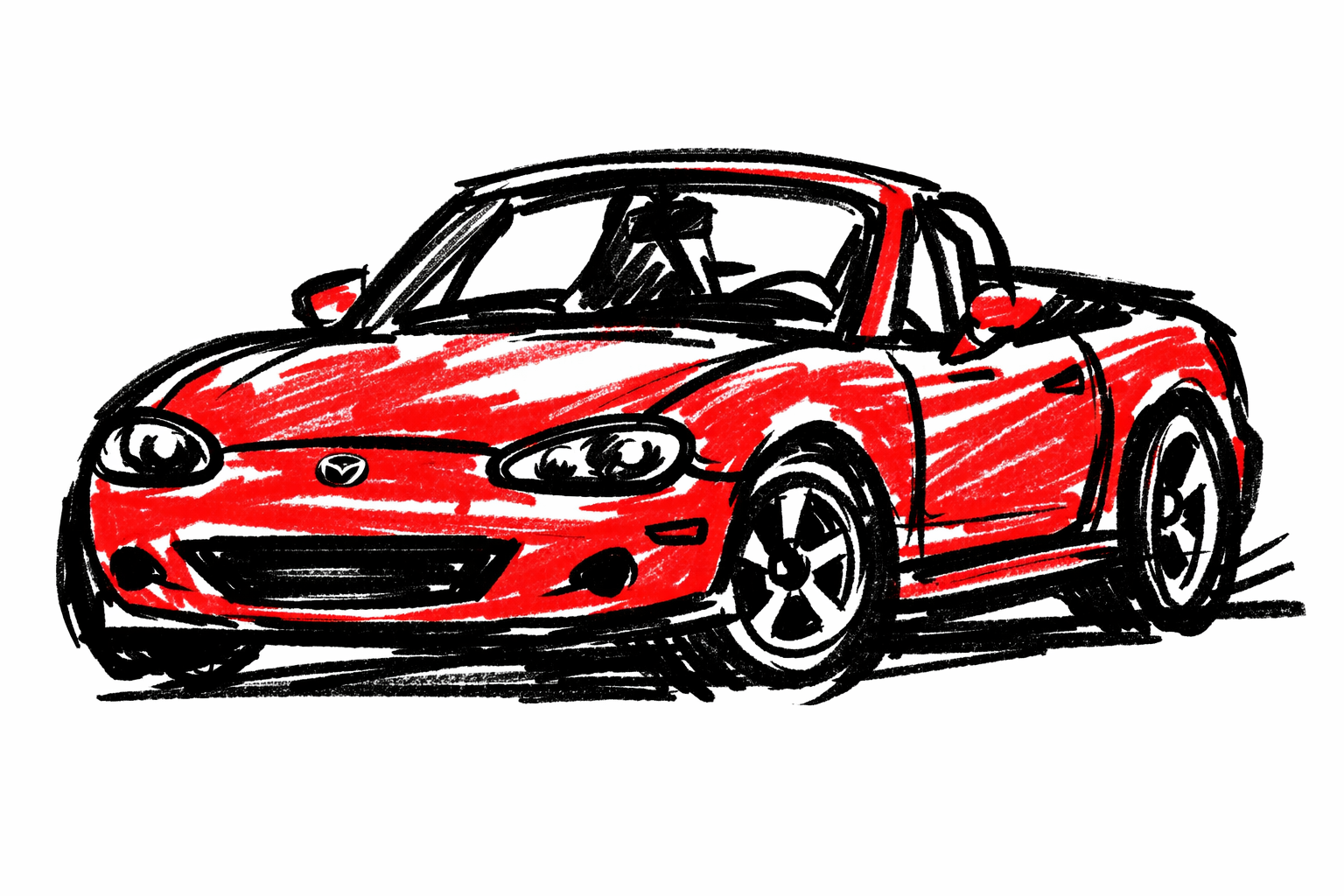
This guide is for Mazda MX-5 NB (NB1/NB2, 1998-2005) only.
Camshaft front seal replacement is a front-of-engine service that is usually done with timing-belt access work. Treat this as an advanced procedure because cam timing errors can create immediate no-start or severe drivability problems.
Warning: Raise and support the car safely, and work only with a cool engine while wearing eye/hand protection. https://www.2carpros.com/articles/front-main-seal-replacement
High-risk quote: “a simple error in positioning the belt could severely compromise engine operation.” https://www.scegliauto.com/en/video/mazda/tutorial/4186/
Manual-reference quote: NB service data is separated by year groups (including 1999-2001 and 2005 manuals), so final procedure details/torques must be confirmed by exact year/VIN FSM. https://www.mellens.net/mazda/index.html
Required Tools
- Jack, axle stands, wheel chocks
- Full socket/ratchet set, breaker bar
- Torque wrench(es), including low-range where needed
- Cam/crank locking or holding tools as required by your method
- Seal puller or equivalent low-damage extraction tool
- Seal driver/installer of correct diameter
- Good lighting, mirror, lint-free rags, brake cleaner
Required Parts / Fluids
- Camshaft front oil seal(s), matched to engine/year
- Timing belt kit parts if service overlap is planned
- Small amount of clean engine oil for seal lip pre-lube
- Valve-cover gasket/corner sealant only if removed and required by your manual
Model-specific notes (NB1 vs NB2)
NB1 (1998-2000)
- Generally simpler front-cam gear handling than many VVT-equipped NB2 setups.
- Still verify pulley indexing and timing marks with year-specific manual data.
NB2 (2001-2005, many 1.8 VVT cars)
- VVT-side disassembly/reassembly details can be less intuitive than non-VVT layouts.
- Community threads repeatedly show uncertainty around VVT-side hardware orientation and sealing strategy; confirm exact method before disassembly.
Community quote: NB owners discussing cam-seal jobs on VVT engines specifically ask how to correctly refit the VVT-side hardware and whether it relies on bolt clamping/indexing assumptions. https://www.mx5nutz.com/threads/cam-seals.190545/post-2255337
Step-by-Step Procedure
1) Confirm leak source before opening the front engine
Do not assume every front-area oil trace is a cam seal.
High-risk quote: “Engine oil leaks should not be ignored… there is a risk of engine damage or failure if your engine runs too low on oil because of a leak.” https://www.aa1car.com/library/oil_leaks.htm
- Degrease the front/top engine area.
- Run briefly and trace fresh oil path.
- Confirm whether leak starts at cam-seal region, valve-cover area, CAS/O-ring area, or elsewhere.
Community confirmation quote: NB VVT owners report visible residue near rear cam pulley/cover areas that can look like cam-seal failure, but they still need trace-first diagnosis before ordering parts. https://www.mx5nutz.com/threads/nb-1-8vvt-oil-leak-location.391837/post-4553508
2) Set engine at reference timing position and document alignment
- Rotate engine to correct reference timing position per FSM.
- Photograph/mark alignment references before belt removal.
- Remove covers and related components for safe access.
3) Remove belt tension and expose cam seal area
Cam seals are often replaced while the timing belt is off because access overlaps strongly.
Community quote: MX-5 timing-belt how-to material commonly treats cam seals as “while-you-are-there” items in a full front-engine service kit. https://mx5unleashed.com/tech/timing-belt-mx5.html
- Release timing-belt tension per manual method.
- Remove cam pulley/sprocket as required for seal access.
- Keep hardware grouped and labeled.
4) Extract old seal without damaging shaft or housing
- Use a seal puller or controlled extraction method.
- Avoid scratching camshaft sealing surface or front housing.
High-risk quote: If sealing surfaces are scratched/scored during removal, new seals can leak immediately after startup. https://www.2carpros.com/articles/front-main-seal-replacement
5) Inspect running surfaces before installing new seal
- Check cam journal/sealing surface for grooves or corrosion.
- If groove wear is significant, replacement seal alone may not permanently solve leakage.
- Clean bore and ensure no old seal fragments remain.
6) Install new cam seal squarely and to correct depth
- Lightly oil seal lip (not the outside diameter unless specified).
- Drive seal evenly with proper installer tool.
- Confirm orientation and installed depth against year/VIN manual.
7) Reassemble timing system and verify before first start
- Refit cam gear/VVT components and belt per manual sequence.
- Rotate engine by hand through multiple revolutions.
- Re-check cam/crank timing marks before cranking.
High-risk quote: Timing alignment errors after belt/front-seal work can prevent starting and compromise engine operation, so hand-rotation/mark recheck is mandatory before first ignition attempt. https://www.scegliauto.com/en/video/mazda/tutorial/4186/
Community confirmation quote: NB VVT discussion highlights uncertainty around extra sealant use on VVT mechanism covers during cam-seal work; follow FSM and sealant requirements exactly, not guesswork. https://www.mx5nutz.com/threads/sealant-on-vvt-mechanism-cover.391299/post-4550552
Torque Specs / Capacities (if applicable)
- Camshaft seal depth/orientation: use exact year/VIN FSM guidance.
- Cam gear/VVT fastener torque values: use exact year/VIN FSM guidance.
- Timing-belt tension procedure values: use exact year/VIN FSM guidance.
Because source access this run did not provide a complete, publish-safe NB-wide torque/depth matrix across NB1/NB2 and VVT/non-VVT variants, this article intentionally avoids one-size-fits-all numeric values.
Verification / Post-service checks
- Idle remains stable after first start.
- No fresh oil at cam-seal perimeter after idle and short road test.
- No timing-area noise, no belt tracking anomalies.
- Reinspect after first full heat cycle and again after several drives.
Uncertainty / Open Questions
- Some community references (especially VVT details) are high-value but not substitutes for factory year/VIN instructions.
- Miata.net forum content was partially access-restricted in this environment during this run, reducing direct cross-forum quote depth.
- Confidence is high on process/safety sequencing; moderate on universal numeric settings due known variant differences.
Image Credits
No clearly reusable licensed NB-specific camshaft-seal procedural diagrams/photos were obtained during this run.
Sources
- Mellens.net — Mazda Miata Factory Service Manuals. Retrieved 2026-03-12. https://www.mellens.net/mazda/index.html
- ScegliAuto — Timing Belt Replacement (With video). Retrieved 2026-03-12. https://www.scegliauto.com/en/video/mazda/tutorial/4186/
- MX-5 Unleashed — Changing of the timing belt (cambelt), water pump…. Retrieved 2026-03-12. https://mx5unleashed.com/tech/timing-belt-mx5.html
- AA1Car (Larry Carley) — How To Find & Fix Engine Oil Leaks. Retrieved 2026-03-12. https://www.aa1car.com/library/oil_leaks.htm
- 2CarPros — How to Replace an Automotive Engine Front Crankshaft Seal: Step-by-Step Guide. Retrieved 2026-03-12. https://www.2carpros.com/articles/front-main-seal-replacement
- MX5Nutz Forum — Cam Seals. Retrieved 2026-03-12. https://www.mx5nutz.com/threads/cam-seals.190545/post-2255337
- MX5Nutz Forum — NB 1.8vvt Oil leak location. Retrieved 2026-03-12. https://www.mx5nutz.com/threads/nb-1-8vvt-oil-leak-location.391837/post-4553508
- MX5Nutz Forum — Sealant on VVT mechanism cover?. Retrieved 2026-03-12. https://www.mx5nutz.com/threads/sealant-on-vvt-mechanism-cover.391299/post-4550552