Before You Start / Safety
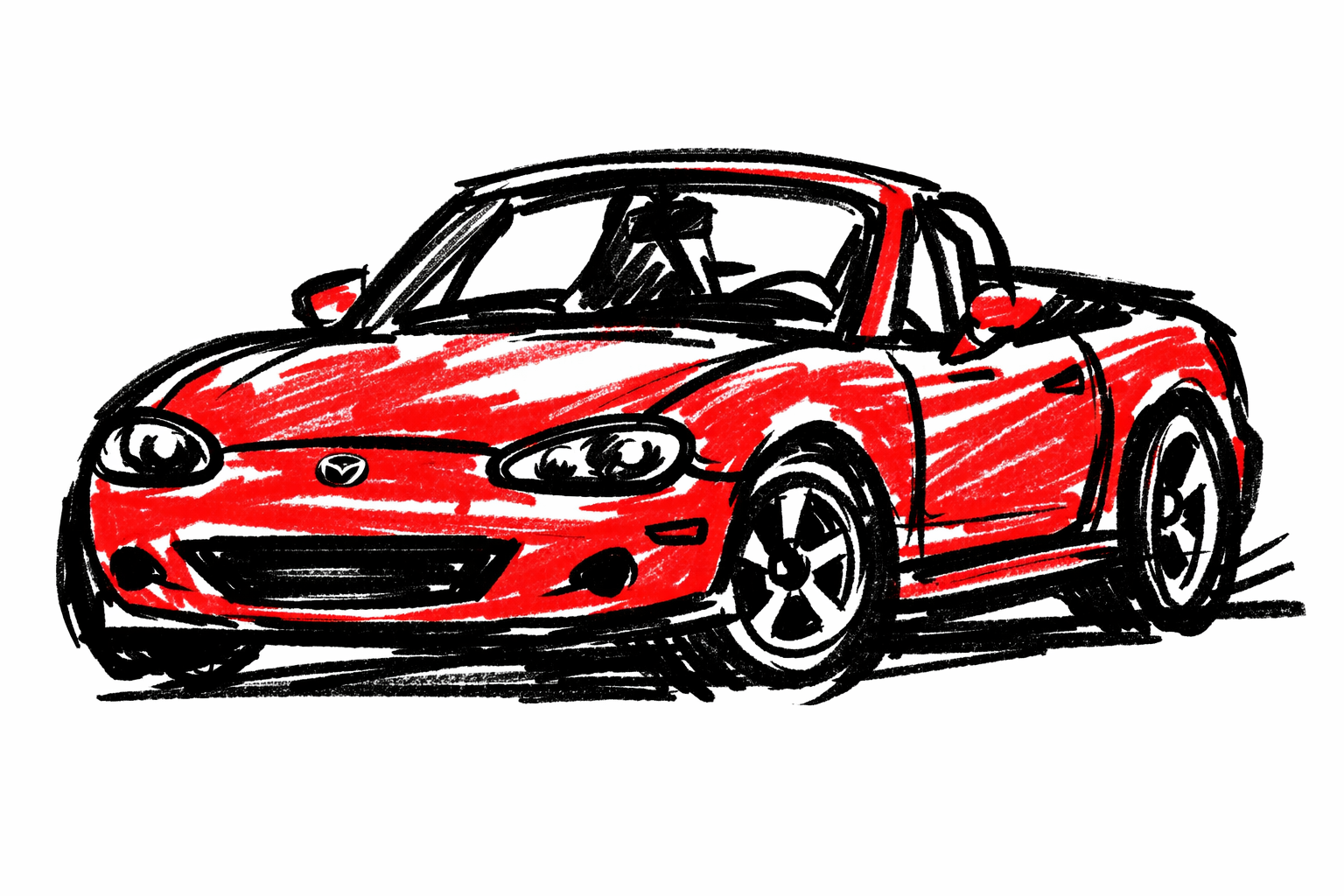
This guide is for Mazda MX-5 NB (1998-2005) only.
ABS behavior can vary by market/trim because some NB cars were delivered without ABS.
Warning: “Use jack stands to support the vehicle if needed.” https://www.2carpros.com/articles/how-to-replace-a-brake-master-cylinder
High-risk quote: “Never drive a car that does not have good brake pedal pressure.” https://www.2carpros.com/articles/how-to-replace-a-brake-master-cylinder
Manual-reference quote: Mellens indexes NB-era service manuals (1999-2001 and 2005), so ABS sensor resistance/ring-clearance checks and wiring diagrams must be confirmed by exact year/VIN. https://www.mellens.net/mazda/index.html
Required Tools
- Floor jack + rated jack stands
- Wheel removal tools
- Flashlight and inspection mirror
- Non-metallic brush and brake cleaner (sensor-safe cleaning)
- Multimeter (for FSM-defined checks)
- Dielectric grease (connector sealing, if FSM/part maker allows)
Required Parts / Fluids
- Usually none for inspection/cleaning only
- Replacement wheel-speed sensor and clips if damaged
- Harness clips/retainers if brittle or missing
Practical consumables
- Sensor-safe cleaner and lint-free wipes
- Small amount of dielectric grease for connector seal area only (not on sensor tip/air-gap surface)
Model-specific notes (NB1 vs NB2)
NB1 (1998-2000)
- ABS presence and harness routing can vary by market; verify hardware is present and matched to wheel hub/tone ring configuration.
NB2 (2001-2005)
- Same caution: prior hub/brake swaps can change tone ring and sensor compatibility.
Step-by-Step Procedure
0) Find the sensor and connector before disassembly
Typical NB layout:
- Front sensors: mounted at steering knuckle/hub area, with harness routed up the strut/inner fender.
- Rear sensors: mounted at rear hub/upright area, with harness clipped along trailing-arm/subframe path to body connector.
Before removing anything, identify:
- sensor retaining bolt,
- harness clip points,
- body-side connector location.
1) Confirm complaint and basic context
Typical symptoms are ABS warning lamp, intermittent lamp after bumps/wet weather, or inconsistent ABS engagement.
2) Perform visual harness and connector inspection first
- Follow each wheel-speed sensor lead from sensor body to connector.
- Look for cracked insulation, rub-through, broken retainers, and corrosion at connector pins.
- Repair routing/clipping issues before replacing sensors.
3) Sensor head and tone-ring area inspection
- Remove wheel for access.
- Inspect for metallic debris, rust scale, and mud packed around sensor body and tone-ring path.
- Clean sensor tip/adjacent area carefully (no aggressive scraping on sensing face).
- If sensor is stuck in bore, soak with penetrant and work gently side-to-side; do not pry hard against knuckle/upright casting.
- Inspect tone ring for cracked/missing teeth or heavy corrosion that can cause intermittent dropout.
4) Electrical check (FSM-guided)
- Use year/VIN FSM values for resistance/signal checks.
- Compare side-to-side plausibility where appropriate.
- Wiggle-test the harness near clips and flex points while monitoring meter for intermittent opens.
- If out-of-range or intermittent open/short is confirmed, replace sensor/harness section as required.
5) Reassembly and routing verification
- Reinstall sensor with correct seating depth/orientation per FSM.
- Front axle: turn steering lock-to-lock and confirm harness does not stretch or contact tire sidewall/spring.
- Rear axle: cycle suspension travel (jack under control arm) and confirm no rub on wheel, arm, or damper.
- Confirm clips are fully seated and connector lock tab clicks positively.
6) Post-service validation
- Clear code(s) via proper diagnostic method.
- Perform controlled low-speed test in safe area.
- Confirm ABS warning lamp behavior and recheck for recurring fault.
Torque Specs / Capacities (if applicable)
- Sensor fasteners and bracket torques: year/VIN FSM only
- Harness retainer/anchor details: year/VIN FSM only
No universal publish-safe NB ABS sensor torque/spec table is provided here.
Verification / Post-service checks
- ABS lamp remains off after startup/self-check (where equipped)
- No new sensor harness rub/contact through full steering lock and suspension movement
- No repeat ABS fault after short road test
Uncertainty / Open Questions
- ABS hardware and test thresholds vary by year/market and ABS equipment level.
- Therefore final resistance/signal limits and replacement criteria are intentionally FSM-gated for year/VIN accuracy.
Image Credits
No reusable, clearly licensed NB-specific ABS sensor location diagrams were retrieved in this run.
Sources
- Mellens.net — Mazda Miata Factory Service Manuals. Retrieved 2026-03-13. https://www.mellens.net/mazda/index.html
- 2CarPros — How to Replace a Brake Master Cylinder (general workshop safety/line-handling context). Retrieved 2026-03-13. https://www.2carpros.com/articles/how-to-replace-a-brake-master-cylinder
- AutoZone — Advice & How-To’s (general brake/diagnostic context). Retrieved 2026-03-13. https://www.autozone.com/diy
- 2CarPros — Why Does My Brake Pedal Go to the Floor? (brake fault-context triage). Retrieved 2026-03-13. https://www.2carpros.com/articles/brake-pedal-goes-to-the-floor