Before You Start / Safety
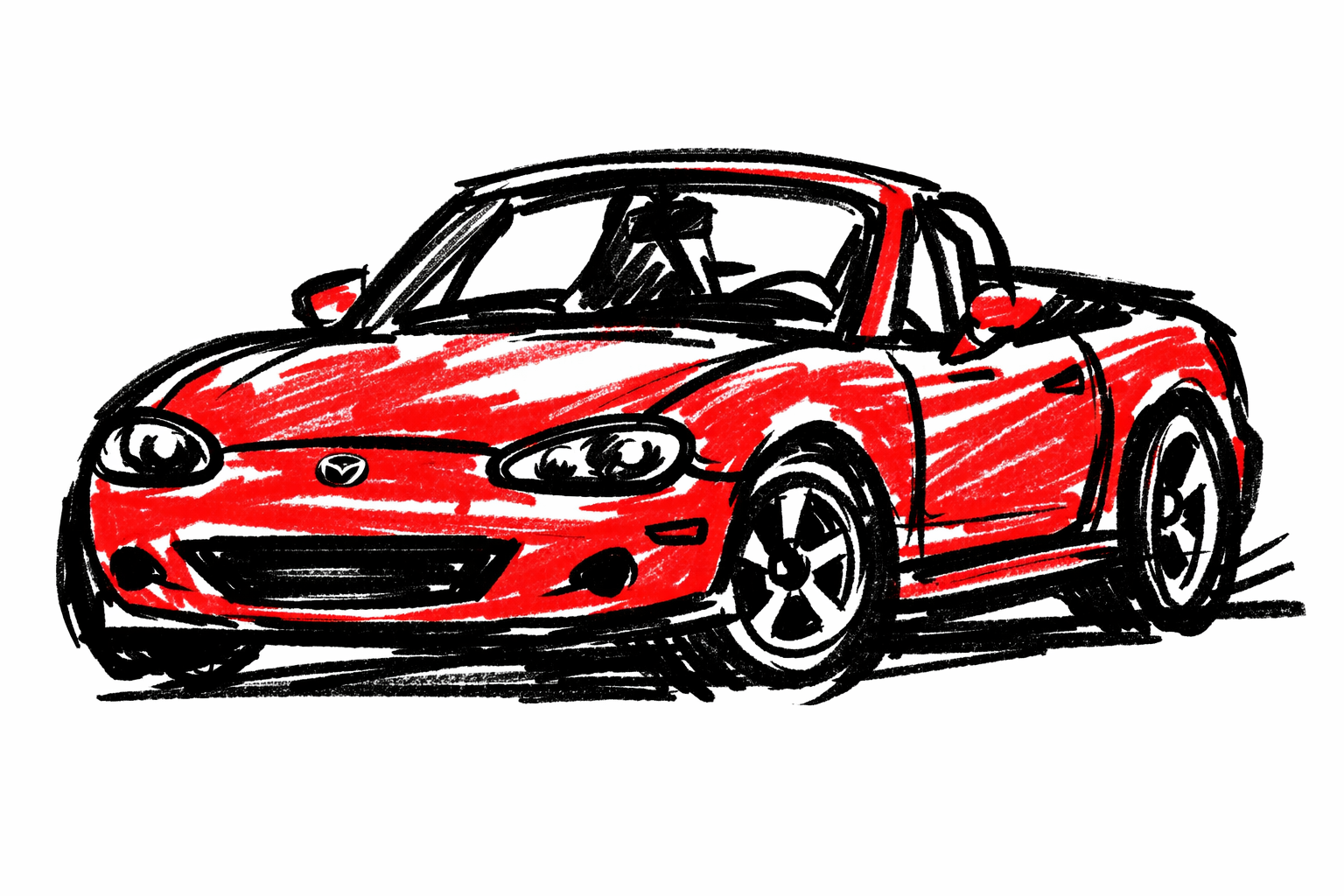
This guide is for Mazda MX-5 NB (1998-2005, NB1/NB2).
Weak cabin heat is often caused by one of four things:
- low coolant/air in system,
- thermostat not reaching normal temperature,
- heater-core restriction,
- heater control door/cable issue.
Diagnose in that order before replacing parts.
- Work only on fully cooled engine.
- Coolant is toxic; capture every drain/flush discharge.
- Protect alternator/belt area from water spray during hose flushing.
Required Tools
- Hose-clamp pliers or screwdrivers
- Drain pan + absorbent rags
- Short hose adapters/tubing for controlled flush
- Low-pressure water source (garden hose with gentle flow)
- Gloves + eye protection
Required Parts / Fluids
- Correct coolant for refill/bleed
- Replacement hose clamps if originals are weak/rusted
- Replacement heater hoses only if cracked/hardened
Practical quantity planning
- For heater-core-only flush/reconnect, keep at least 2-3 L premixed coolant ready for refill and bleed corrections.
- If old coolant is heavily contaminated, do a full cooling flush instead of partial top-up.
Where heater-core hoses are on NB
Standing in front of the car, look at the firewall behind the engine:
- Two rubber hoses pass through the firewall into the heater core.
- These are the hoses you disconnect for core flush.
- On warm engine (before cooling down for service), one hose may feel hotter than the other; this helps identify flow direction.
Do not confuse heater hoses with small throttle-body or expansion-tank hoses.
Step-by-Step Procedure
1) Confirm symptom type first
- No heat at all: check coolant level, thermostat behavior, and heater controls.
- Heat only at higher RPM: low flow/airlock/restriction suspicion.
- Sweet smell or windscreen film: possible core leak; pressure-test before flushing aggressively.
2) Baseline thermal check before disassembly
With engine fully warm and heater set to hot:
- feel both heater hoses carefully,
- both should be warm/hot (one somewhat cooler is normal).
Diagnostic clue:
- one very hot and one much cooler = reduced heater-core flow likely.
3) Depressurize and disconnect hoses (cold engine)
- Let engine cool completely.
- Open radiator cap safely.
- Place drain pan under firewall hose area.
- Loosen heater-hose clamps and twist hoses gently to free them.
If hose is stuck, rotate first; avoid prying hard against firewall tubes.
4) Reverse flush first, then forward flush
- Connect low-pressure water to the outlet side so flow runs backward through core.
- Flush until discharge clears and flow stabilizes.
- Swap and flush in normal direction.
- Alternate directions 2-3 times until water runs clear both ways.
Use gentle pressure only. Heater cores are not designed for high-pressure blasting.
5) Reassemble and refill
- Reconnect hoses fully onto firewall pipes.
- Position clamps behind bead/lip of pipe.
- Refill cooling system with correct coolant mix.
- Bleed system per NB process.
6) Validate heater output
After full warm-up:
- cabin air should become consistently hot at idle,
- both heater hoses should now be similarly hot,
- no gurgling sounds from dash area.
7) Leak and level recheck
After complete cooldown:
- recheck radiator and expansion level,
- inspect heater hose joints at firewall for seepage.
Practical decision points
- If heat improves briefly then fades, suspect remaining air or recurring low-coolant issue.
- If no improvement despite good coolant level and normal engine temp, inspect HVAC blend door/cable operation.
- If coolant smell or interior fog persists, escalate to heater-core leak diagnosis/replacement.
Verification / Post-service checks
- Stable cabin heat at idle and low road speed
- No coolant leaks at firewall hose connections
- No persistent coolant smell in cabin
- Stable coolant level over 2-3 heat cycles
Sources
- MELLENS — Mazda Miata Factory Service Manuals (year/VIN cooling and heater-system confirmation source). Retrieved 2026-03-14. https://www.mellens.net/mazda/index.html
- Rick’s Free Auto Repair Advice — Flush a heater core (reverse-flush method rationale and sequence context). Retrieved 2026-03-14. https://ricksfreeautorepairadvice.com/flush-a-heater-core/
- 2CarPros — How to Repair a Heater Not Working (thermostat/coolant-level/heater-core diagnostic order context). Retrieved 2026-03-14. https://www.2carpros.com/articles/car-heater-not-working
- MX5Nutz Forum — Heating Very Very Weak (NB owner symptom pattern and bleed/flow troubleshooting context). Retrieved 2026-03-14. https://www.mx5nutz.com/threads/heating-very-very-weak.138294/