Before You Start / Safety
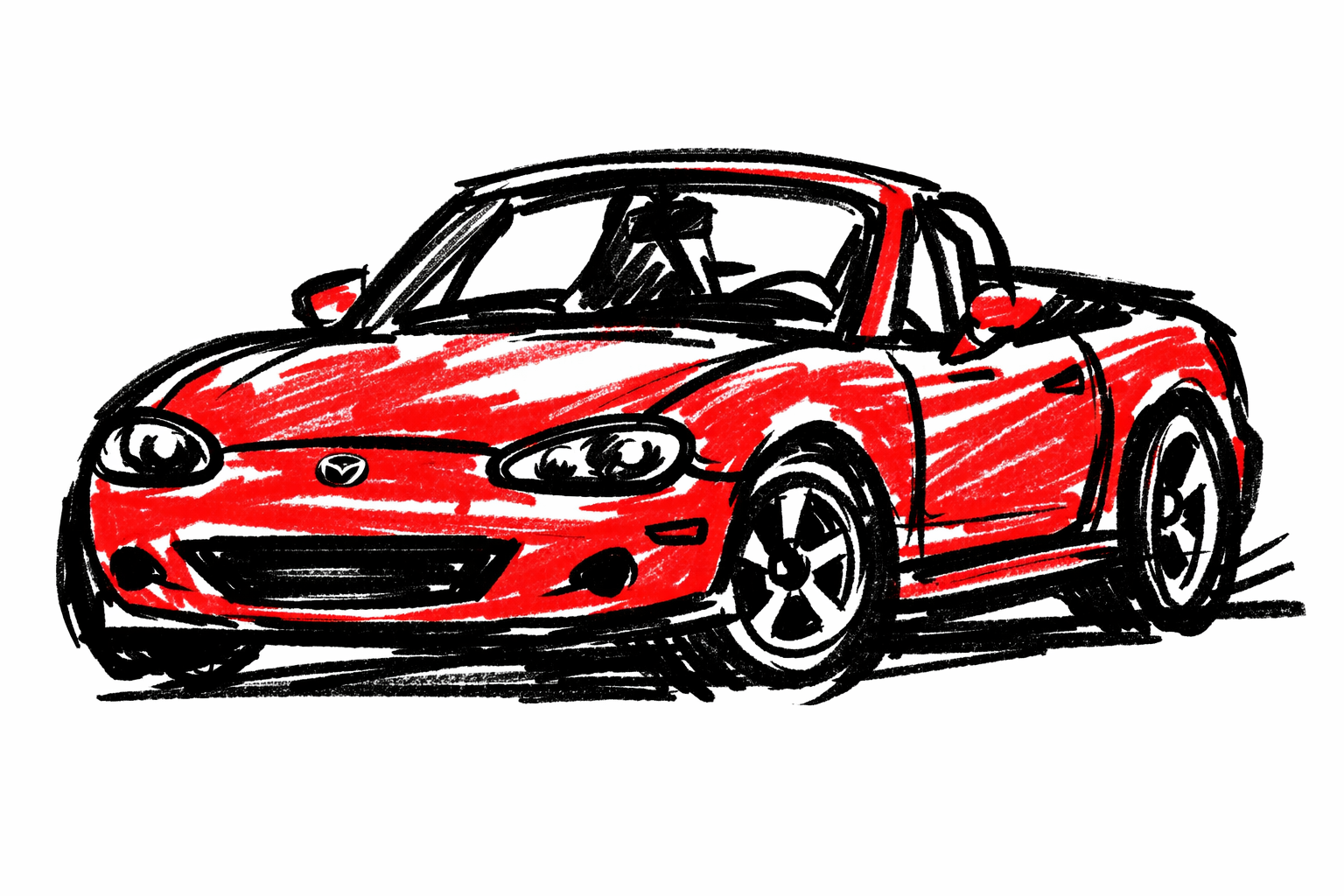
This guide is for Mazda MX-5 NB (1998-2005).
Washer faults are safety-critical because poor spray plus weak wiping can leave the screen effectively blind in rain/road film.
- Keep hands clear of wiper arms/linkage during powered tests.
- Do not probe electrical connectors with oversized tools.
- Use proper washer fluid, not long-term plain water.
Required Tools
- Small trim tool/screwdriver
- Multimeter or test light
- Thin nozzle-cleaning pin (used gently)
- Small pliers for hose clips
Required Parts / Fluids
- Washer fluid appropriate for your climate
- Replacement hose, nozzle, or pump as needed
- New pump grommet/seal if seepage is present at tank interface
Practical washer-fluid guidance
Choose fluid by freeze protection rating on label:
- summer-only mixes for warm weather,
- winter mixes rated below your local minimum temperature.
Example products commonly used by owners (market-dependent):
- Sonax/Carlube/Comma screenwash concentrates,
- Prestone or Rain-X premix variants with freeze protection.
Mix concentrates exactly to label ratio; over-dilution can freeze lines/nozzles.
Where components are on NB
On NB cars, washer components are typically arranged as:
- reservoir at front corner of engine bay,
- electric pump in lower portion of reservoir,
- hose running from pump outlet toward hood nozzles,
- two spray nozzles mounted on hood.
Before diagnosis, trace entire hose route once so you know where leaks can appear.
Step-by-Step Procedure
1) Classify symptom first
Identify one of these patterns:
- wipers move but no spray,
- weak spray,
- one nozzle sprays and the other does not,
- pump silent,
- pump audible with no output.
2) Basic checks (fast wins)
- Verify reservoir has fluid.
- Confirm fluid is not frozen/gelled.
- Check washer fuse before deeper electrical work.
3) Pump command test
- Activate washer switch and listen at reservoir area.
- If silent: check voltage/ground at pump connector during command.
- If voltage present but pump silent: pump likely failed.
4) Hose leak/block check
- Inspect hose joints from pump to hood for splits or disconnects.
- Command washer while observing for under-hood spray/leaks.
- Repair brittle hose sections and ensure snug push-fit at joints.
5) Nozzle clearing and aiming
- Clear nozzle gently (do not enlarge orifice).
- Aim each stream so it lands in lower-to-middle wipe path at standstill.
- Road airflow pushes spray upward at speed, so avoid aiming too high at rest.
6) Paired wipe-quality validation
After spray is restored:
- verify blade condition and contact pattern,
- ensure fluid is removed cleanly without chatter/streaking,
- replace blades if wash works but wipe remains poor.
Practical fault split (quick reference)
- Pump audible + no spray: blockage, disconnected hose, or major leak.
- No pump sound + no voltage at pump: fuse/switch/relay/control path fault.
- Pump has voltage + silent: pump motor fault.
- One nozzle weak only: localized nozzle blockage or kinked branch hose.
Verification / Post-service checks
- Strong, consistent spray from both nozzles
- No leaks at pump grommet or hose joints
- Wipers clear sprayed fluid in 1-2 passes
- Washer works repeatedly without pump fade
Sources
- MELLENS — Mazda Miata Factory Service Manuals (year/VIN washer-circuit confirmation source). Retrieved 2026-03-14. https://www.mellens.net/mazda/index.html
- 2CarPros — Windshield Washer Not Working? Here’s How to Fix It (diagnostic sequence context). Retrieved 2026-03-14. https://www.2carpros.com/articles/windshield-washer-not-working
- AutoZone — Advice & How-To’s (general visibility and service context). Retrieved 2026-03-14. https://www.autozone.com/diy