Before You Start / Safety
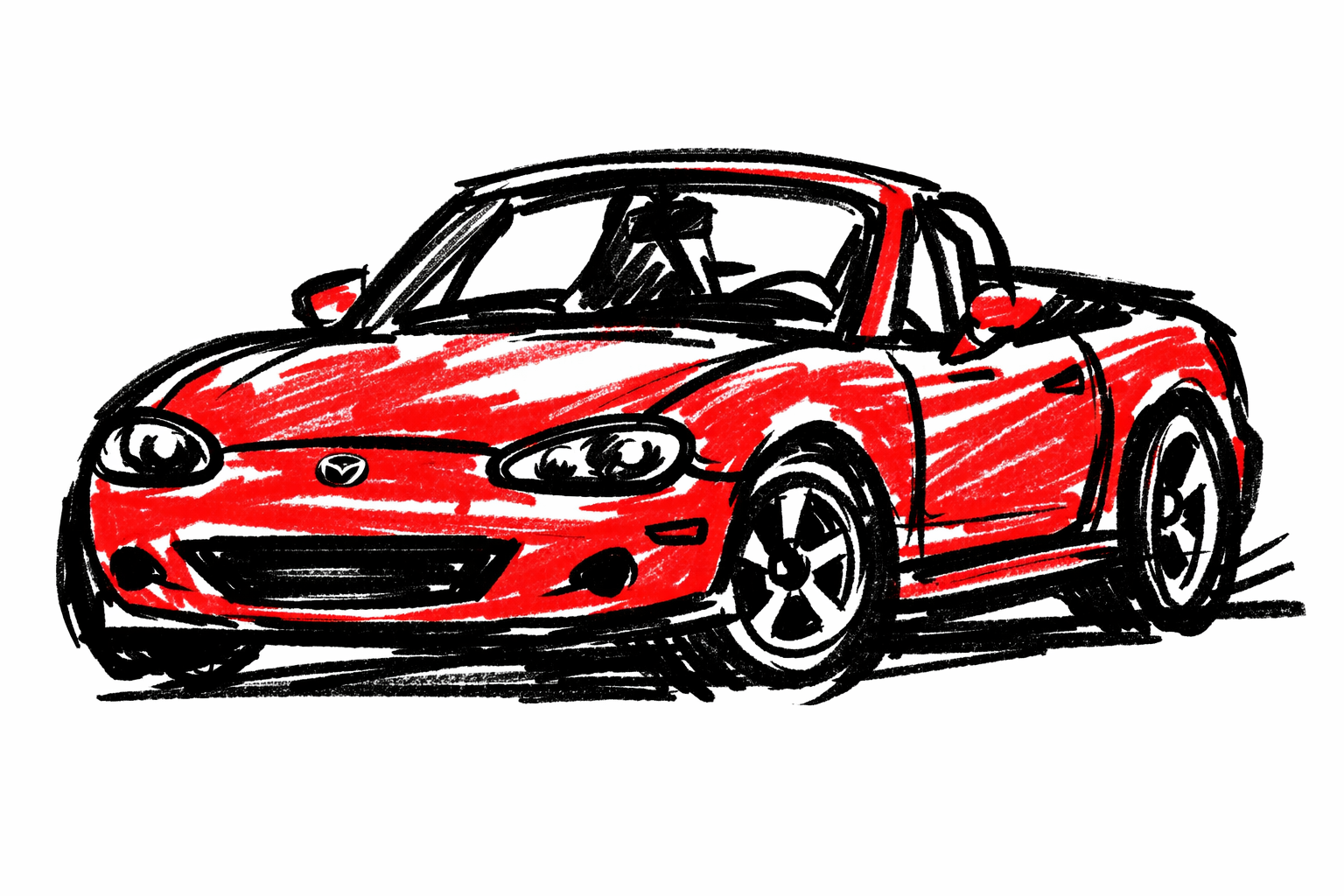
This guide is for Mazda MX-5 NB (1998-2005, NB1/NB2).
Pressure testing is the fastest way to find slow leaks that never drip while driving.
- Engine must be fully cold.
- Open cap slowly through first detent only when cold.
- Do not exceed radiator cap pressure rating during test.
Required Tools
- Cooling-system pressure tester with correct adapter
- Flashlight + inspection mirror
- UV torch (optional, if coolant dye already present)
- Gloves, eye protection, rags
- Drain pan
Required Parts / Fluids
- Correct coolant for top-up after diagnosis
- Replacement cap/hose/clamp/seal only after leak source is confirmed
Where to inspect on NB during pressure test
- Radiator filler neck and cap seat (front top of radiator)
- Plastic tank seams (top and side edges)
- Upper/lower radiator hose necks and clamp zones
- Water pump weep area (front of engine behind belt region)
- Heater hose connections at firewall
- Expansion/recovery bottle and small return hose
- Thermostat housing area
Step-by-Step Procedure
1) Baseline cold inspection
Before pressurizing, look for dried coolant residue (white/green/pink crust), damp staining, or sweet odor trails around leak-prone points.
2) Install pressure tester correctly
- Remove radiator cap cold.
- Fit adapter squarely and hand-tighten until sealed.
- Ensure gauge starts at zero and connection does not seep.
3) Pressurize slowly to target
Use cap-marking/FSM value as final authority.
Practical NB test target guidance:
- Typical automotive cooling systems are often tested around 80-110 kPa (12-16 psi) depending cap spec.
- Common cap markings you may see: 0.9 bar (~13 psi) or 1.1 bar (~16 psi).
Pump in steps and pause briefly to avoid overshoot.
4) Hold and observe
- Hold pressure for about 2-5 minutes while inspecting all major points.
- If no leak seen but gauge drops, continue detailed mirror inspection at lower radiator seam, hose undersides, and pump area.
5) Interpret results
- Stable gauge + dry system: no obvious external leak at test pressure; continue cap/combustion-gas/heat-cycle diagnostics.
- Slow drop + trace moisture: typical minor external seep (hose clamp, seam, neck, heater hose, cap seat).
- Rapid drop: active external leak or major sealing failure.
6) Re-test after fix
After replacing failed part:
- repeat pressure test to same target,
- confirm stable gauge and dry joints,
- then refill/bleed and verify level stability over heat cycles.
Practical decision rules
- If leak appears only at cap neck under pressure, test/replace cap before replacing radiator.
- If coolant loss persists with no external leak, escalate to combustion-gas/head-gasket diagnostics.
- If radiator neck or tank seam cracks are present, replacement is preferred over patch repairs.
Verification / Post-service checks
- Coolant level remains stable for multiple cold-start checks
- No fresh residue at previously wet locations
- Normal temperature behavior in traffic and cruise
- Cabin heater output remains consistent (no trapped-air symptoms)
Sources
- MELLENS — Mazda Miata Factory Service Manuals (year/VIN cooling-system confirmation source). Retrieved 2026-03-14. https://www.mellens.net/mazda/
- Natrad — How To Pressure Test A Cooling System (pressure ranges and test rationale). Retrieved 2026-03-14. https://natrad.com.au/info-advice/how-do-you-pressure-test-a-cooling-system/
- 2CarPros — How to Perform an Automotive Engine Cooling System Pressure Test (tooling and method sequence context). Retrieved 2026-03-14. https://www.2carpros.com/articles/radiator-pressure-test
- MX5Nutz Forum — Coolant Problem To Pressure (NB owner troubleshooting context for methodical leak diagnosis). Retrieved 2026-03-14. https://www.mx5nutz.com/threads/coolant-problem-to-pressure.102900/