Before You Start / Safety
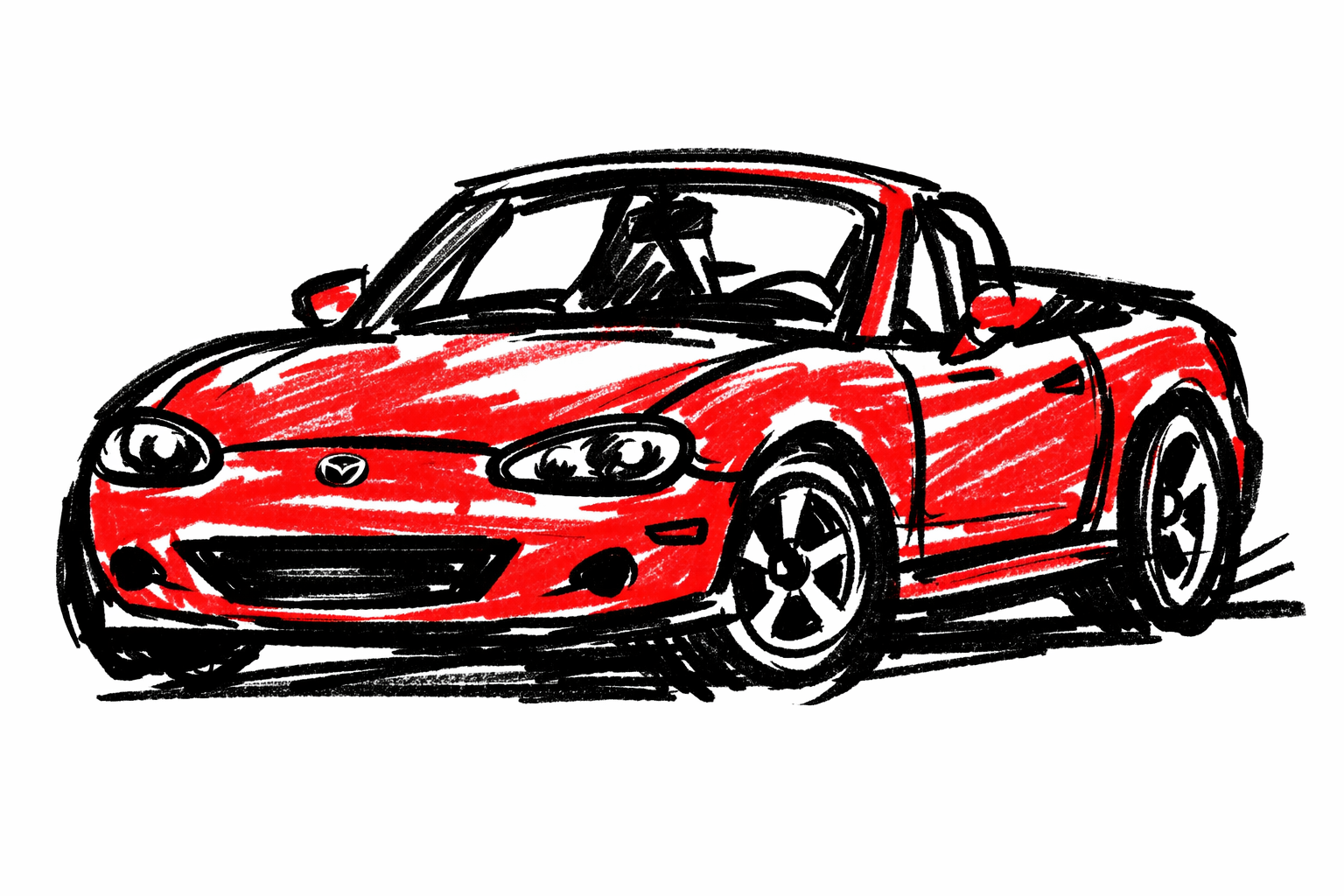
This guide is for Mazda MX-5 NB (1998-2005).
A puncture can often be repaired safely—but only when the injury is in the right place and the tire has no hidden internal damage.
- If tire pressure dropped very low while driving, assume possible internal damage until inspected.
- Do not treat rope-plug roadside repairs as permanent.
- If you are unsure about injury location or size, replace the tire or get professional internal inspection.
Required Tools
- Tire pressure gauge
- Soapy-water spray bottle (leak localization)
- Chalk/paint marker
- Tread depth gauge
- Small ruler or caliper (puncture-size estimate)
Repairability boundaries (use these first)
A puncture is generally repairable only when all are true:
- In the central tread area (not shoulder or sidewall).
- Injury diameter is ≤ 6 mm (1/4 in).
- No evidence of running underinflated (inner liner/casing heat damage).
- No overlapping prior repairs in the same area.
If any one fails, replacement is the safer choice.
Step-by-Step Procedure
1) Confirm leak and mark exact location
- Inflate to target cold pressure.
- Use soapy water and mark bubbling point.
- Mark puncture relative to tread centerline and shoulder blocks.
If the leak is at shoulder transition or sidewall, stop: non-repairable in normal service practice.
2) Check immediate replacement triggers
Replace now if you find:
- sidewall/shoulder puncture,
- cut/slash rather than clean puncture,
- bulge/cord exposure,
- clear underinflation damage (rubber dust, overheated smell, internal liner scuffing once dismounted),
- multiple close or overlapping old repairs.
3) Choose repair method correctly
- Permanent service repair: internal patch + stem/plug combo after tire is removed and inspected internally.
- Temporary emergency mobility only: external rope plug.
A plug alone is not considered a proper permanent repair standard.
4) Post-repair pressure and behavior checks
After proper repair:
- check pressure after 20-50 km,
- check again next morning cold,
- watch for vibration or steering pull,
- rebalance if vibration appears.
5) Pair-replacement decision on NB rear-wheel-drive handling
If replacement is required, evaluate same-axle tread mismatch:
- Around 2/32 in (1.6 mm) or more difference on same axle can be enough to justify pair replacement for balanced grip behavior.
On an NB, rear traction balance is especially important in wet/cold conditions.
Practical roadside rule
If you used a sealant can or rope plug to get home:
- Drive conservatively.
- Avoid sustained high speed.
- Schedule internal tire inspection as soon as possible.
Treat roadside fix as a transport solution, not end-state repair.
Verification / Post-service checks
- Pressure stable over 24-72 hours
- No new vibration/noise at road speed
- Repair remains dry/no bubbling on soap test
- Tire wear remains even at next monthly check
Sources
- USTMA — Tire Repair Basics (industry repair boundaries: tread-only, ≤1/4 in, remove-and-inspect, patch+plug requirement). Retrieved 2026-03-15. https://www.ustires.org/tire-care-safety/tire-repair-basics
- Discount Tire — Tire Repair (consumer-facing repairability limits and shoulder/sidewall non-repair guidance). Retrieved 2026-03-15. https://www.discounttire.com/learn/tire-repair
- MELLENS — Mazda Miata Factory Service Manual archive (year-specific NB tire/wheel baseline reference source). Retrieved 2026-03-15. https://www.mellens.net/mazda/index.html