Before You Start / Safety
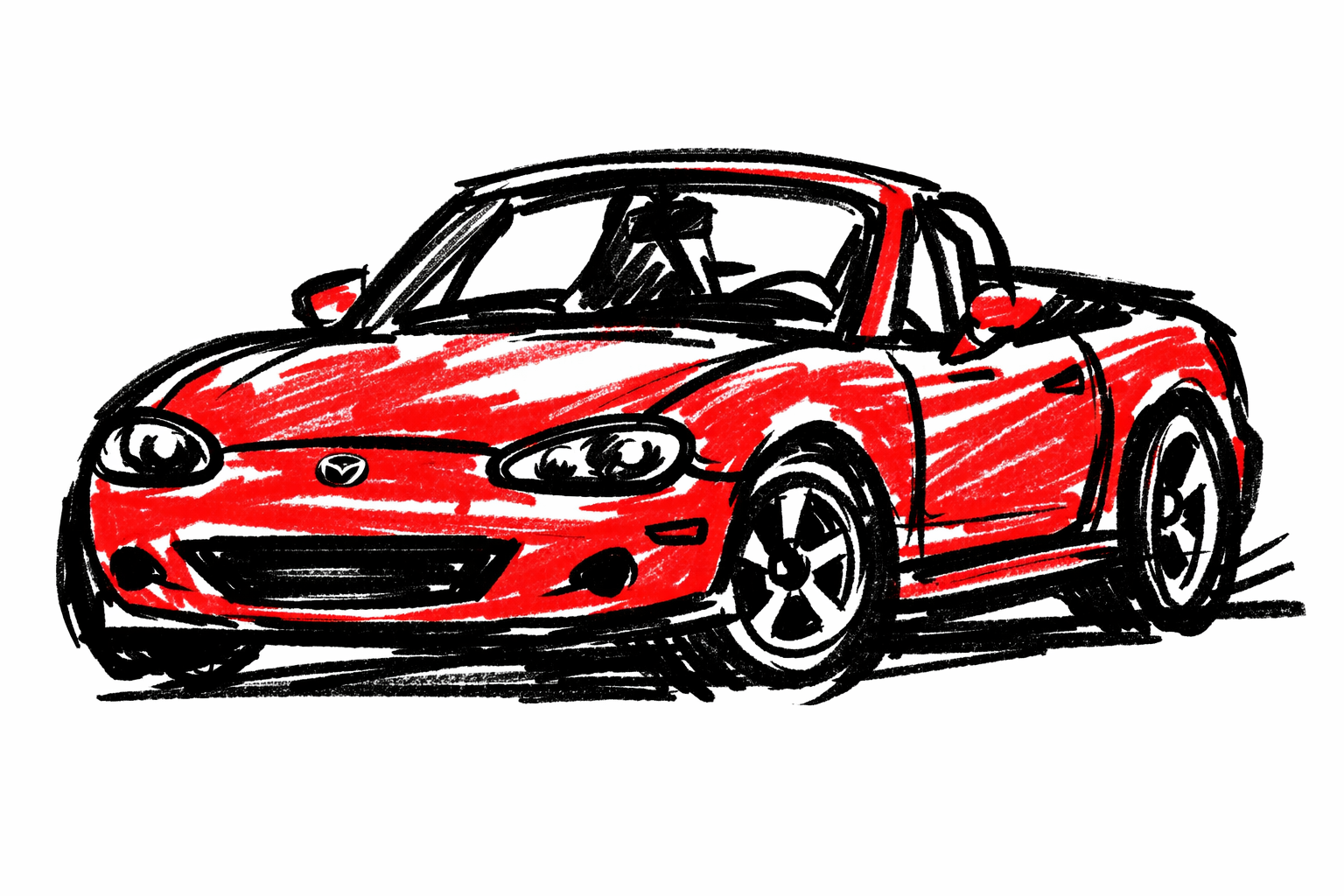
This guide is for Mazda MX-5 NB (1998-2005) only.
NB cars use hydraulic assist. The most common DIY failure during flush is running the reservoir low and aerating the pump.
- Work on level ground.
- Keep fluid off belts and painted surfaces.
- If front wheels are lifted for steering sweeps, support with stands.
Required Tools
- Fluid transfer syringe/turkey baster
- Catch bottle + clear hose (return-line method)
- Hose clamp pliers or screwdriver for clamps
- Funnel + clean rags
- Jack/stands (optional but helpful)
Required Parts / Fluids
- ATF that matches NB PS spec language (Dexron II/III compatibility)
- Replacement clamp(s) if originals are weak
Practical quantity planning
- Reservoir exchange refresh: ~1.0 L
- More complete return-line flush: ~1.5-2.0 L
Buy 2 L if you are doing a full exchange with unknown fluid history.
Where the reservoir is on NB
From front of car with bonnet open:
- Reservoir is a small black round container near accessory-belt side/front area.
- Cap has integrated dipstick with COLD/HOT marks.
- It is lower and smaller than the brake/clutch reservoir at the firewall.
Step-by-Step Procedure
1) Confirm fluid spec before opening system
Read reservoir-cap text first. NB owner references commonly cite Mazda M-III / Dexron II-type equivalent language.
Do not mix unknown fluid families. If existing fluid is unknown, do a full flush instead of topping up blindly.
2) Initial condition check
Before flushing, note:
- fluid color/odor,
- pump whine at idle/parking speeds,
- visible hose/rack seepage.
This gives you a before/after baseline.
3) Choose method
Method A: Reservoir exchange (safer/simple)
- Extract fluid from reservoir.
- Refill to proper mark with fresh ATF.
- Start engine briefly and sweep steering gently left-right (do not hold against stops).
- Shut off and repeat 4-8 cycles until fluid appearance improves.
Method B: Return-line flush (more complete)
- Disconnect return hose at reservoir and route to catch bottle.
- Plug reservoir return nipple.
- Feed fresh fluid into reservoir while helper briefly runs engine and turns wheel slowly.
- Stop immediately if reservoir level drops too fast.
- Reconnect hose once clean fluid exits.
4) De-aerate and set final level
- With system reconnected, fill to COLD mark (engine cool).
- Start engine and do slow lock-to-lock sweeps 3-5 times (no hard stop holding).
- Let bubbles settle, recheck level, and top up.
- After short road test, verify HOT range if specified by dipstick.
Verification / Post-service checks
- Steering assist is smooth both directions
- No persistent foam on dipstick
- Reduced or eliminated pump whine
- No fresh leaks at reservoir, hoses, pump, or rack inputs
Common mistakes to avoid
- Using generic “power steering fluid” when cap/manual calls for ATF.
- Letting reservoir run low during exchange.
- Holding steering at full lock during bleeding.
- Overfilling above HOT/COLD marks.
Sources
- Miata.net Forum — [NB] Castrol Transmax Import ATF for power steering? (owner-cited manual wording for NB PS fluid: Mazda M-III equivalent / Dexron II context). Retrieved 2026-03-14. https://forum.miata.net/vb/showthread.php?t=549067
- CarCareKiosk — Check Power Steering Level: 2001 Mazda Miata LS 1.8L 4 Cyl. (NB reservoir location and level-check workflow context). Retrieved 2026-03-14. https://www.carcarekiosk.com/video/2001_Mazda_Miata_LS_1.8L_4_Cyl./power_steering_fluid/check_fluid_level
- MELLENS — Mazda Miata Factory Service Manual archive (year/VIN confirmation source). Retrieved 2026-03-14. https://www.mellens.net/mazda/