Before You Start / Safety
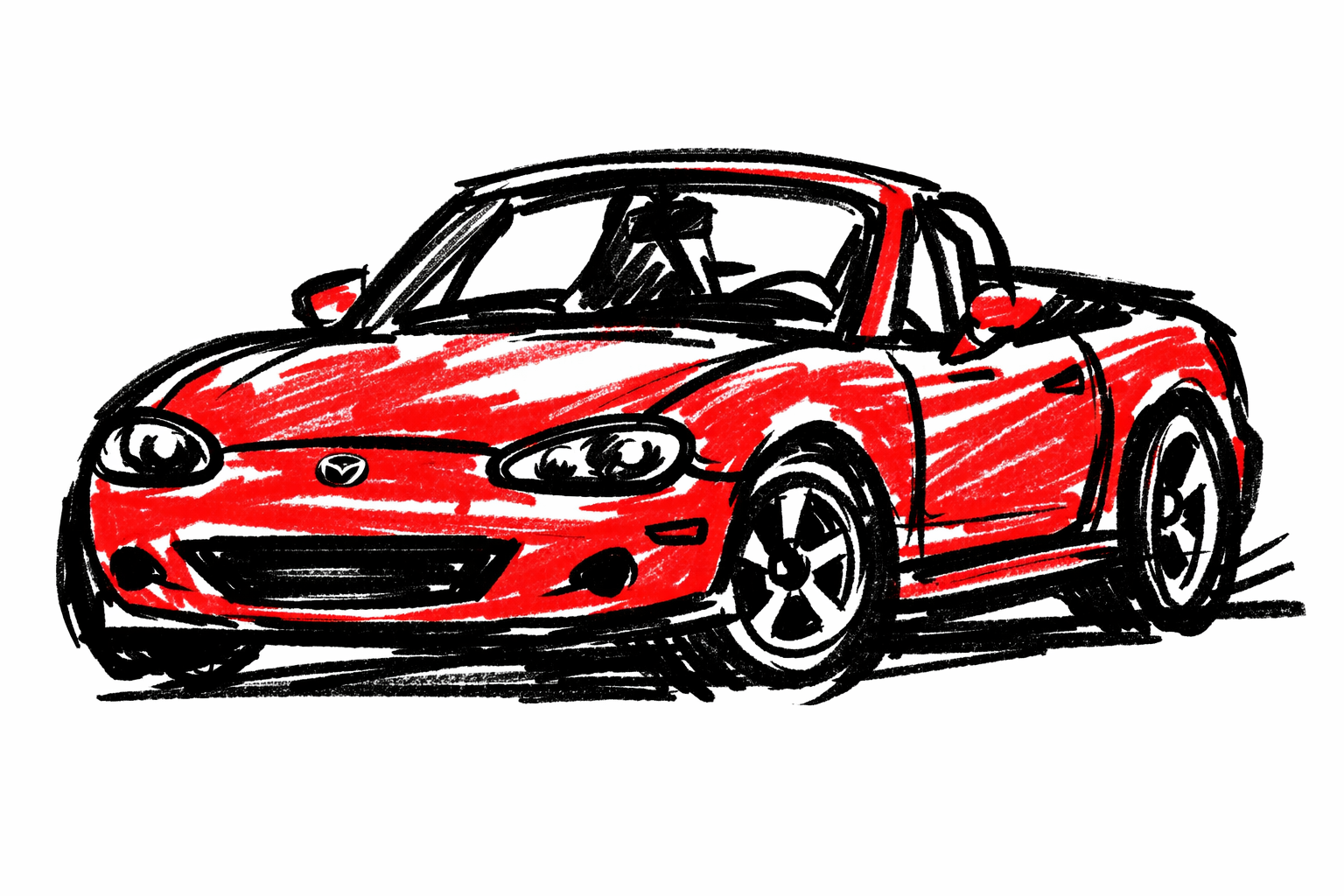
This guide is for Mazda MX-5 NB (1998-2005) only.
Rack boots protect inner tie rod joints and rack seals from water/grit. A torn boot can quickly escalate into rack wear if ignored.
Warning: “Use jack stands to support the vehicle if needed.” https://www.2carpros.com/articles/how-to-replace-a-brake-master-cylinder
High-risk quote: A loose/worn tie-rod condition can affect steering stability and tire wear, and requires correction plus alignment. https://www.2carpros.com/articles/tie-rod-end-replacement
Manual-reference quote: Mellens indexes NB-era manuals (1999-2001 and 2005), so rack boot clamp style, vent routing, and torque/adjustment values must be confirmed by exact year/VIN before final tightening. https://www.mellens.net/mazda/index.html
Required Tools
- Floor jack + rated jack stands
- Basic socket/wrench set
- Tie-rod separator tools (if outer tie-rod removal is required)
- Side cutters/pliers for clamp handling
- Torque wrench
- Paint marker and measuring tools for tie-rod reference length
Required Parts / Fluids
- Correct left/right rack boot kit for NB rack type
- Correct clamps/retainers (do not reuse damaged clamps)
- Optional: inner tie rod lock hardware if disturbed
Practical parts notes
- Replace boots in pairs if both are same age/hardness.
- If one boot is full of water/rust debris, inspect opposite side closely for early cracking.
- Keep spare cotter pins on hand if outer tie-rod hardware uses castellated nut + pin.
Model-specific notes (NB1 vs NB2)
NB1 (1998-2000)
- Verify boot and clamp style by actual rack installed (many cars have mixed parts).
NB2 (2001-2005)
- Same caution: prior steering/rack repairs may change hardware details.
Community quote: r/Miata search shows recurring “Steering rack boot (?) broke” and inner tie-rod hardware questions, supporting inspection-first workflow before ordering parts. https://www.reddit.com/r/Miata/search/?q=nb%20steering%20rack%20boot&restrict_sr=1
Step-by-Step Procedure
0) Locate the rack boot and related hardware on NB
Each side has an accordion-style rack boot between:
- inner tie rod at rack end,
- outer tie-rod side where the steering linkage continues to knuckle.
Before teardown, identify and mark:
- outer tie-rod jam nut position,
- clamp style at both boot ends,
- any vent/equalization tube connection between boots.
1) Confirm boot failure and check for deeper damage
Before replacing boot, inspect:
- inner tie rod play,
- water/contamination inside torn boot,
- rack seal leakage,
- outer tie-rod condition.
If inner joint/rack leakage is present, boot-only replacement may be insufficient.
2) Baseline toe/tie-rod reference
- Mark tie-rod jam nut position.
- Record exposed thread count or measured length.
This helps reassembly, but does not replace alignment.
3) Remove old boot and inspect vent path
- Disconnect required tie-rod components per FSM.
- Remove old clamps and boot.
- Inspect vent tube/boot venting path for blockage or misrouting.
Tip for preserving toe baseline:
- count turns when removing outer tie rod from threaded section,
- reinstall by same turn count plus jam-nut reference mark.
This is only a temporary baseline to get to alignment safely.
4) Decide boot-only vs additional steering service
If you find corrosion, looseness, or rack seepage at this stage, escalate to inner tie-rod/rack service rather than sealing problems under a fresh boot.
5) Install new boot correctly
- Seat boot lips fully on rack housing and tie-rod lands.
- Install new clamps with proper tension/orientation.
- Ensure vent path is open and routed correctly.
- Verify boot is not pre-twisted before final clamp tension.
- At steering center and near each lock, confirm boot accordion can expand/compress smoothly without folding into a hard kink.
6) Reassemble and perform steering verification
- Reassemble tie-rod hardware to FSM values.
- Verify lock-to-lock movement without boot twisting/contact.
- Perform toe/alignment check after work.
If outer tie-rod taper joint was separated:
- seat taper fully before final nut torque,
- install cotter pin where design requires it,
- ensure jam nut is firmly locked after toe baseline is set.
Torque Specs / Capacities (if applicable)
- Tie-rod, jam-nut, and any disturbed steering fastener torques: year/VIN FSM only
- Rack-boot clamp/vent orientation details: year/VIN FSM only
No universal publish-safe NB-wide steering rack boot torque table is provided.
Verification / Post-service checks
- Boot seated correctly at both ends with no twist
- Vent/pressure equalization path intact
- No steering bind/noise lock-to-lock
- Toe/alignment verified after service
Uncertainty / Open Questions
- Clamp style, vent routing, and tie-rod hardware details can vary by rack type and prior repairs.
- Therefore procedure-critical and numeric values are explicitly FSM-gated by year/VIN.
Image Credits
No reusable, clearly licensed NB-specific steering rack boot diagrams were retrieved in this run.
Sources
- Mellens.net — Mazda Miata Factory Service Manuals. Retrieved 2026-03-13. https://www.mellens.net/mazda/index.html
- 2CarPros — Tie Rod End Replacement (toe baseline, taper-joint handling context). Retrieved 2026-03-13. https://www.2carpros.com/articles/tie-rod-end-replacement
- AutoZone — Advice & How-To’s (general steering/suspension service context). Retrieved 2026-03-13. https://www.autozone.com/diy
- 2CarPros — How to Replace a Brake Master Cylinder (general workshop safety context). Retrieved 2026-03-13. https://www.2carpros.com/articles/how-to-replace-a-brake-master-cylinder